
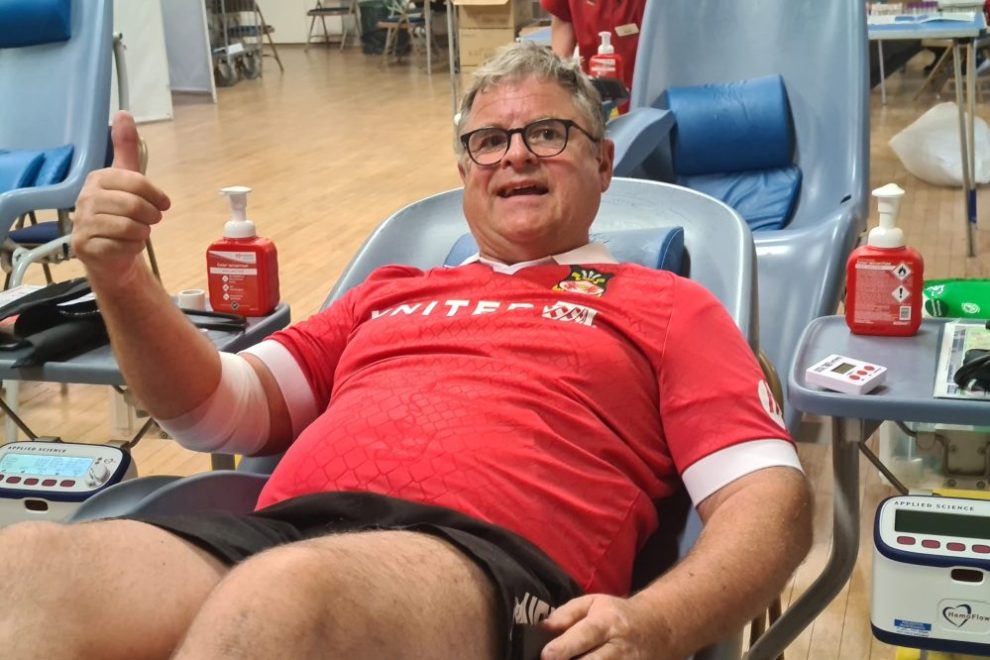

BLOOOD DONORS in North Wales are being praised for their lifesaving contributions to patients across the country by the Welsh Blood Service, ten years on since it became an all-Wales service.
Blood donation in North Wales was provided by NHS Blood and Transplant (NHSBT) in England prior to May 2016.
Since then, North Wales has provided around 160,000 blood donations from nearly 40,000 donors; more than 20 per cent of all donations collected in Wales, playing a critical role in supporting patients in hospitals nationwide.
Alan Prosser, Director of the Welsh Blood Service, said: “Becoming an all-Wales service in 2016 was a hugely important milestone, and one we are incredibly proud of. The contribution of donors in North Wales has been fundamental to making that possible.”
Around 15,000 blood donations are collected from the region each year. Due to the country’s geography, donors in North Wales typically travel further to attend their nearest blood donation session.

Alan added: “The generosity, determination and commitment shown by donors in North Wales is something we never underestimate.
“As we look to the future, we hope to grow our footprint in North Wales, giving people in the area more opportunities to help people in need.”
Former Royal Marine Michael Blake, 78, from Caernarfon, is marking 60 years of blood donation this year. A journey that began in extraordinary circumstances.
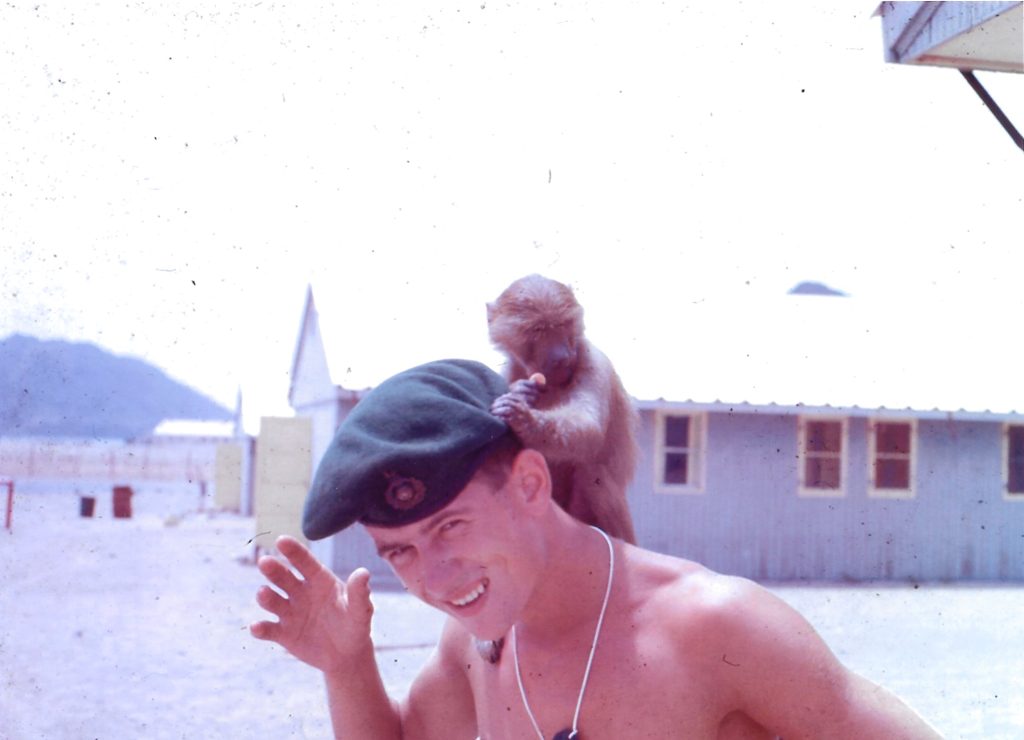
Michael was serving in the Middle East in 1966 when he made his first-ever donation directly into the arm of a critically injured fellow soldier. An RAF vehicle had struck a landmine while on patrol, leaving several soldiers badly injured and in urgent need of blood transfusions. Using information from dog tags, medics were able to identify which blood types were needed.
The experience left a lasting impression. Michael continued donating whenever and wherever he could throughout his life. Six decades later, he has donated blood more than 120 times. With each donation potentially saving up to three lives, his commitment may have helped as many as 360 people.
Michael said: “I’ve donated blood in many different places around the world, but I’ve never felt more pride than when I made my first donation after the change to the Welsh Blood Service.
“Knowing my donation was going to help someone in Wales was a wonderful feeling.”
He also recalls the moment when the real-world impact of blood donation hit home. Returning from a donation, he stopped to talk to a neighbour who asked about the bandage on his arm. When he explained he had just donated blood, she told him she had suffered severe blood loss during childbirth and required five units of blood.
He added: “She said ‘it could’ve been my blood’ that saved her. I know the chances are small, but it really brought it home to me – you never know whose life you could be helping. And knowing those donations go to patients here in Wales means a great deal to me.”
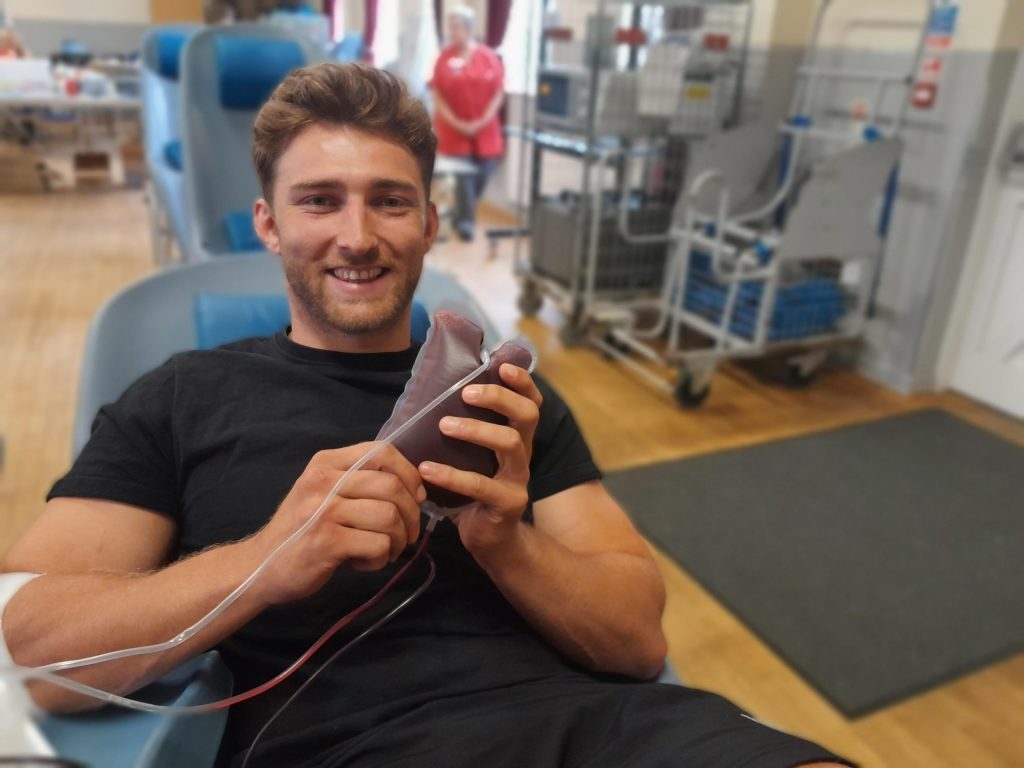
The Welsh Blood Service must collect around 350 units of blood every day to meet the needs of 19 hospitals across Wales, including Ysbyty Gwynedd in Bangor, Wrexham Maelor Hospital and Ysbyty Glan Clwyd in Rhyl.
As the Service also celebrates its 80th anniversary later this year, it maintains a strong presence in North Wales, operating sites in Bangor and Wrexham and employing around 50 staff locally.
One of those staff members is Kay Newell, who recently celebrated 40 years of service. Kay began her career in March 1986 as a Driver Receptionist in a non-clinical role and is now a Blood Donation Supervisor, managing donation clinics across the North East.
Kay spent much of her career with NHS Blood and Transplant but says the transition to the Welsh Blood Service was a significant and positive change.
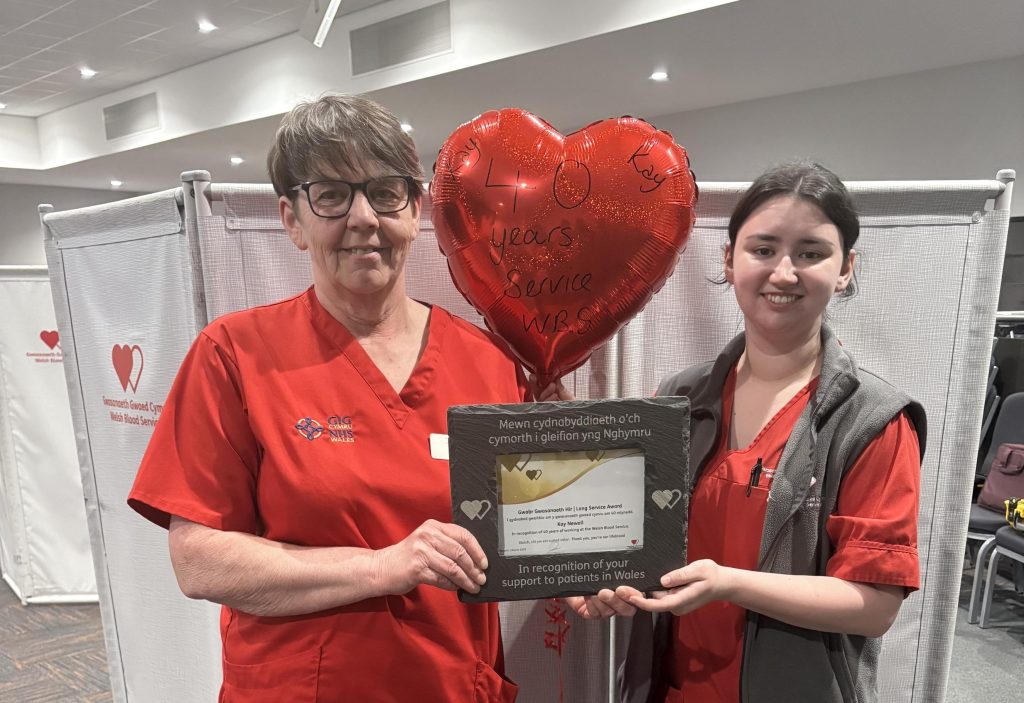
Kay said: “It really is a source of pride to support donors and know that their donations are helping patients in Wales.”
The Welsh Blood Service says it is continually working to reduce the physical and logistical distance between North Wales and its headquarters in South Wales.
Currently, blood donations collected in North Wales are transported by road once a day to the Service’s headquarters in Talbot Green for testing and processing. A second daily journey then takes processed blood to the stock-holding unit in Wrexham.
In December last year, the Welsh Blood Service announced it is working with partners to explore the potential use of drone technology to transport blood across Wales.
Peter Richardson, Deputy Director of the Welsh Blood Service, said: “Transport is one of our biggest logistical challenges – not only moving blood after donation, but getting it to patients quickly in emergency situations.
“By exploring drone technology, we’re looking at ways to create faster and more resilient transport links between South, West and North Wales. Ultimately, our goal is to bring all parts of Wales closer together through a stronger, more responsive blood supply chain.”