

COUNCILLORS are set to make a momentous decision on plans that will completely change parking in Cardiff.
Cardiff Council’s new city parking plan, first announced in 2024, proposes a surcharge for drivers of larger vehicles like SUVs and new rules for parking and parking permit holders.
Council cabinet members will meet on Thursday, October 16, to make a decision on the latest version of the plans which includes some changes following a public consultation.
The new plan is designed to reduce commuter parking, encourage more sustainable modes of transport and improve air quality.
It’s aim is also to improve parking in the city for certain groups, like carers, who will have the opportunity to apply for new permits.

However, there has been some criticism of the plans, including its restrictions on parking permits for student-only properties and the impact it could have on businesses and local community groups.
Even if they are given the go-ahead, the new parking rules will take some time to be fully implemented as the proposal is for the scheme to be phased in over a period of 10 years.
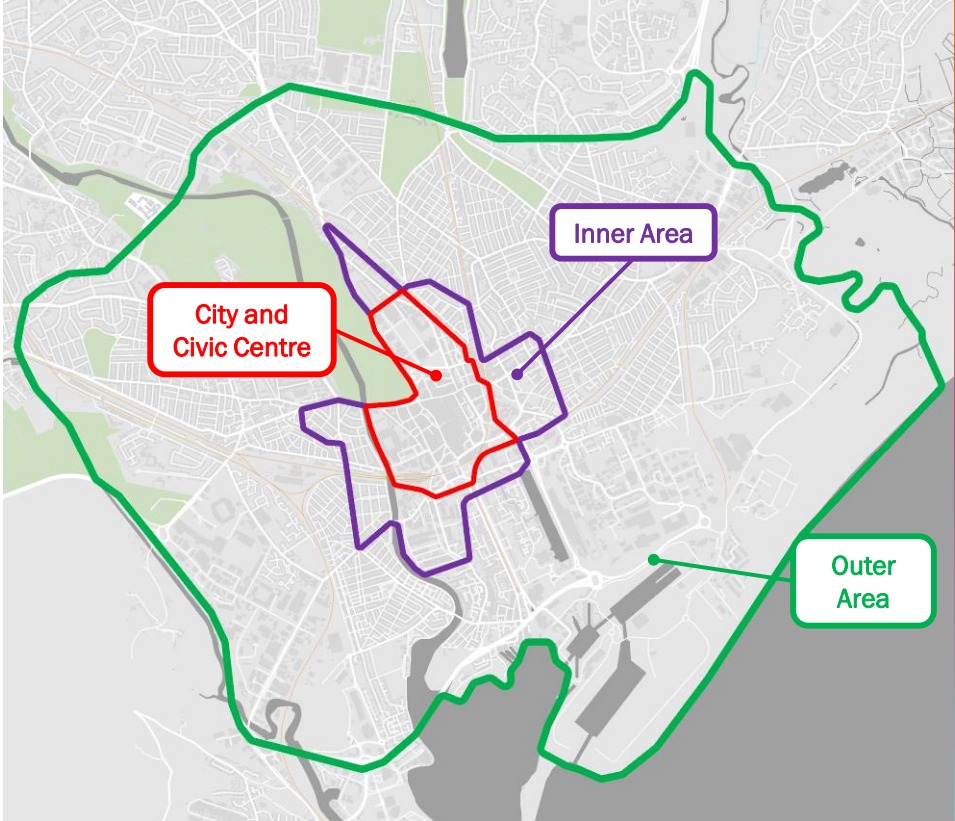
A key element of the city parking plan will see Cardiff split into into different parking management areas (PMAs).
These would be the city and civic centre area, the inner area, and the outer area.
Each area will be subdivided into controlled parking zones (CPZs).
The PMAs would work as follows:
City and civic centre area
- Parking will be prioritised for blue badge holders, taxis, buses, and deliveries
- Parking controls will apply all day every day
- There will be no residential parking permits for this area and any existing ones will be phased out when the holder moves property
- Loading will only be allowed in designated bays or areas
Inner area
- Parking will mainly be a mixture of permit holder only bays, short stay pay and stay only bays, and short stay shared use bays
- At a minimum, parking controls in this area will apply from 8am to 10pm every day
- Parking permits will continue to be issued for residents, students, community premises and visitors
- Businesses will continue not being entitled to parking permits
- Loading on most routes will be prohibited between 8am and 10pm every day
Outer area
- Parking will mainly be a mixture of permit holder only bays, short stay shared use pay and stay bays, and short stay shared use limited waiting bays
- The days and times of parking controls to be implemented in each zone will be determined following consultation with communities
- The proposed hours for parking controls include 8am to 10pm, 8am to 8.30pm, and 8am to 6.30pm
- All permit types will be available in the parking zones here
- Loading on most key routes will be prohibited during peak times
A surcharge for oversized and highly polluting vehicles, like SUVs, has been kept in the council’s parking plan.

In terms of which vehicles could be affected, a council report on the parking plan states the local authority is proposing a surcharge for vehicles over 2,400kg in revenue weight.
It also states that in time, this would be reduced to 2,000kg for non-electric vehicles.
Vehicles over 3,500kg in revenue weight will not be entitled to permits.
A total of 6,381 people responded to the council’s consultation on the city parking plan.
Since then, the plan has been updated to include a number of changes like certain student-only properties remaining eligible for parking permits.
However, these properties will have their visitor permit allowance halved.
The most controversial proposals, based on the council’s data on its consultation, were no parking permits for city centre residents, the extension of restricted parking hours in the inner city area, and the proposal for business and trade permits to only be issued for parking zones in the outer area.
Some of the other changes Cardiff Council made to its original proposal include:
- Cutting the number of PMAs from four to three, combining the originally proposed Bay PMA with the outer PMA
- Changing the operational days and times for parking controls in the outer PMA to be dependent on local conditions, subject to further consultation
- Greater flexibility to residents for purchasing visitor permits
- Community permits, educational permits, and essential service parking permits will be issued
- The proposed inner zone will be reduced in size to correspond with the historic central parking zone, with eligibility cirteria for permits being revised to support businesses
If the council approves the plans, the local authority’s governing traffic regulation order (TRO)will need to be updated and another consultation will go out before changes can be implemented.
Costs associated with parking permits and other tariffs will be consulted on as part of the this TRO process.