

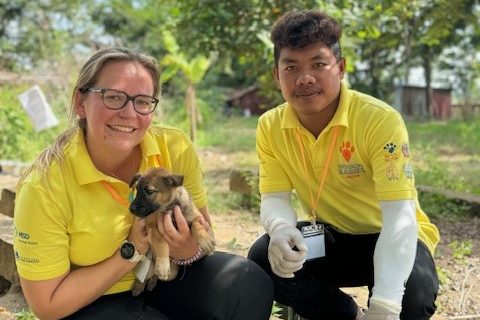

CARDIFF might not be the first place that springs to mind in the global fight against rabies, but this World Rabies Day (September 28), Dogs Trust Cardiff is celebrating the work of one of its own, Molly Brooke, who swapped the streets of Cardiff Bay for the bustling city of Phnom Penh to help combat one of the world’s deadliest diseases.
Last October, Molly, a Learning and Development Officer at Dogs Trust’s rehoming centre in Cardiff, joined a major international effort led by Mission Rabies to vaccinate dogs and stop the spread of rabies in Cambodia. In just two weeks, the team vaccinated an astonishing 230,000 dogs on the streets of Phnom Penh – a milestone that will save countless lives.
Across the world, every nine minutes, someone dies from rabies, with over 99% of human cases caused by a bite from an infected dog. Tragically, more than 40% of those who die from rabies are children. Once symptoms appear, the disease is almost always fatal. In response to the fear of rabies, millions of healthy dogs are inhumanely killed every year—despite the fact that the disease is entirely preventable.
During the vaccination drive, Molly joined volunteers from Dogs Trust, the Worldwide Veterinary Service (WVS), local vets, and community workers to humanely catch and vaccinate dogs, before returning them to their communities.
Speaking about her experience, Molly said: “Being part of this campaign in Cambodia was life-changing. I work with dogs every day here at Dogs Trust Cardiff and never have to worry about rabies.

“But in Cambodia, many people live in fear of the dogs around them – and the dogs, in turn, suffer because of that fear.
“When we vaccinate and educate, we’re not just preventing disease – we’re building understanding and trust between communities and their dogs.
“Rabies is preventable. By vaccinating dogs, we’re not only saving lives but helping people and dogs live together more safely and compassionately.”