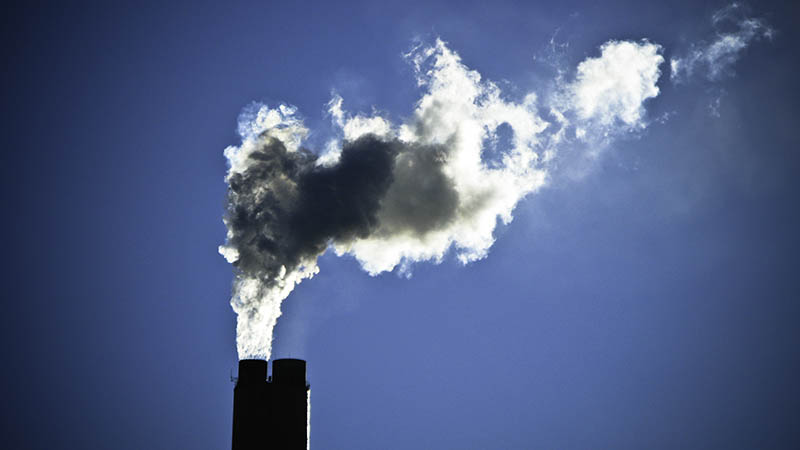

THE AIR QUALITY data for 2024 shows that Cardiff’s air is getting cleaner, with annual average concentrations of pollutants well below legal limits.
In 2024, all monitoring sites across Cardiff, including those in designated Air Quality Management Areas (AQMAs) recorded NO₂ levels below the national limit of 40 micrograms per cubic metre (µg/m³). Notably, Castle Street, previously a pollution hotspot, achieved compliance with an average NO₂ level of 30 µg/m³.
Given the continuous improvement, the Council is now considering revoking three of the four AQMAs due to sustained improvements. The fourth, in Llandaff, may also be eligible for revocation in 2026, pending further data available.
To monitor air pollution, the Council uses various air quality monitoring stations that track pollutants like Nitrogen Dioxide (NO2) and Particulate Matter (PM10 and PM2.5). Legal limits are set for NO2 and PM10, and local authorities in Wales must monitor and report their findings to the Welsh Government annually.
Key findings from the 2024 data include:

- Automatic Monitoring Sites: There are three sites in Cardiff (Fredrick Street, Richards Terrace and Castle Street). Data shows that all three sites, as an annual average, are well within the legal limits for Nitrogen Dioxide (NO2) and Particulate Matter (PM10 and PM2.5).
- Non-Automatic Monitoring Sites: Data from 99 sites monitoring NO2 showed compliance with air quality standards with a continuous downward trend. The average N02 concentrations from these sites are even lower than those experienced during the pandemic and during the national lockdowns.
- Air Quality Management Areas (AQMAs): Cardiff has four AQMAs (City Centre, Stephenson Court, Ely Bridge, and Llandaff). The latest data shows continuous improvements in all AQMAs, with pollutant concentrations below legal limits. Given this, the Council will assess whether to revoke the City Centre, Stephenson Court and Ely Bridge AQMA. Before the decision is made to revoke any AQMA, detailed assessments for projected air quality concentrations within each Cardiff AQMA will be undertaken. This will allow for robust justification for the potential revocation of AQMAs within Cardiff, which would be subject to public consultation and Welsh Government approval. Consideration of revoking the Llandaff AQMA will be considered later in 2026, depending on the results of monitoring undertaken in 2025.
Cllr Dan De’Ath, Cabinet Member for Climate Change, Strategic Planning, and Transport at Cardiff Council, said: “Air pollution, particularly from road traffic, remains a serious public health concern.
“Long-term exposure to pollutants like nitrogen dioxide (NO₂) and particulate matter can lead to heart and lung diseases, strokes, and other health issues.
“Cardiff Council monitors air quality at over 140 locations, including automatic stations and roadside sensors.
“Although the 2024 data is encouraging, any form of air pollution is harmful to health, and we must continue improving Cardiff’s air quality.
“The Council has taken steps to reduce pollutants, including introducing electric buses, retrofitting buses, implementing taxi mitigation measures, and improving cycling and walking routes, which all play a part in improving the air that we breathe and helping our health outcomes.
“The continuous improvement in all AQMA areas is very positive, as historically these areas of the city have been prone to poor air quality.
“Through continual monitoring and improvement over many years, I am pleased that three of them will now be considered for revocation, and if the improvement continues in Llandaff, we may be able to revoke the final AQMA next year.
“In summary, Cardiff’s air quality continues to improve and remains lower compared to pre-pandemic levels or levels experienced during the pandemic. While this is encouraging, more work is needed.
“Everyone can help reduce pollutants by using alternatives to their private car, by using public transport, cycling, or walking, which will also help reduce our carbon footprint and play our part at combatting climate change.“
Cardiff Council’s Cabinet will meet on November 20 to consider the recommendations contained in the annual air quality report, and a webcast of that meeting will be available to watch on the day on the Cardiff Council Webcasting site.