

WHAT was once the largest public sector housing scheme in Wales could soon be completely transformed.
Phase 1a of the Penrhys regeneration project being lead by housing association Trivallis will soon be submitted to Rhondda Cynon Taf (RCT) Council and will involve as many as 121 new houses being built on land to the north of Pen Tyntyla in the Rhondda village.
These will be a combination of two to four-bedroom homes and a single apartment block with 71 market homes and 50 affordable units.
It’s part of a wider masterplan to regenerate the area which proposes the delivery of around 850 new homes, plus a mix of uses to support the new housing.
This includes a replacement primary school, church, community facilities, shop, and new commercial spaces.

The proposed masterplan also proposes to deliver green spaces for walking and cycling, recreation, play, and biodiversity enhancement.
Penrhys was built between 1966 and 1969 as a new modern council housing development.
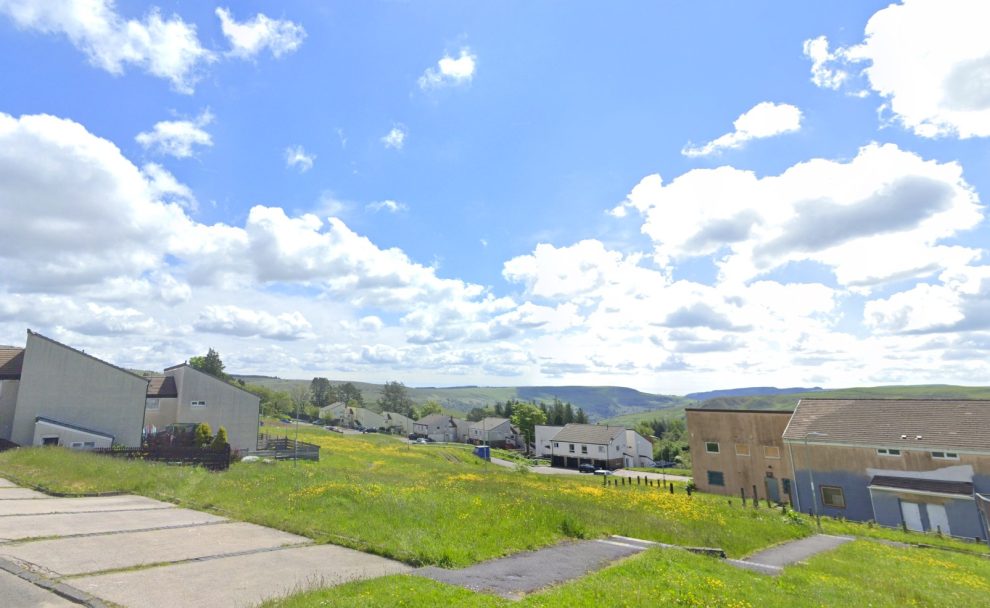
The houses consisted of short two and three-story terraces with cement-rendered concrete walls and mono-pitch roofs.
When it was officially opened in 1968, it was made up of 951 houses.
Penrhys had a district heating system, where water was heated in a central coal-fired boiler and a network of insulated pipes served each house with space heating and hot water, with the cost included in the rent.
A planning statement from The Urbanists on behalf of Trivallis said that this proved very expensive following the oil crisis of 1973, and the village became unviable for residents who did not have access to the state benefits (which paid housing costs) and resulted in many residents leaving the estate.
In an attempt to rejuvenate the village, the Priority Estate Programme was undertaken in the late 1980s, with all houses refurbished and environmental improvements made throughout the community.
This had limited success as new occupants could not be found in sufficient numbers to move to the village and many of the newly refurbished houses remained vacant.
By the 1990s, the local authority had begun a relocation program for Penrhys, with many buildings demolished once the tenants had been relocated.
There are now around 300 properties remaining in the village, including some empty properties, with around 550 residents.

The planning statement said: “The original development and management of the area created a concentration of economic and social deprivation.
“The village area has experienced crime, drug use, and antisocial behaviour, and there have been problems with the deterioration of the buildings and the district heating system.
“Many of the homes have been demolished following the relocation programme, and many are vacant and boarded up.
“As a result, there are noticeable amounts of vacant land and properties mixed in and around the remaining homes.
“The arrangement and extent of parking provision in the area also dominates the village landscape and is detrimental to the character and sense of place.”
It said that the village masterplan and phase 1a are “critical” to help address this and create a sustainable future for the village.
The planning statement also said: “The regeneration of Penrhys village presents a rare opportunity to invest in an existing community with a strong sense of identity and local pride, and to support the future of a settlement that is important to the long-term viability of the local area and the north of Rhondda Cynon Taff County Borough Council. ”