

THE IMPACT of a proposed solar farm in Rhondda Cynon Taf (RCT) will be considered by councillors before the planning inspectorate makes a decision on it.
The application for the solar farm at Glyntaff Farm in Bryntail Road, Glyntaff, is labelled as a development of national significance and so will be decided by a planning inspector but it will go before RCT’s planning committee on Thursday, September 4, for the local impact report to be considered which, if approved, will be submitted to Planning and Environment Decisions Wales (PEDW).
Renantis UK Limited is seeking full planning permission for the installation, operation, and subsequent decommissioning of a renewable energy scheme comprising a solar farm and associated works with a combined capacity of 39.9mw (MegaWatts).
As the installed generating capacity of the proposed development would exceed 10mw it qualifies as a development of national significance (DNS) and the application for planning permission is therefore to be decided by Welsh ministers rather than the council with the process administered by PEDW.
But it is a formal requirement of the DNS process that any relevant council must submit a local impact report to PEDW to assist the appointed inspector in the consideration of the proposals.

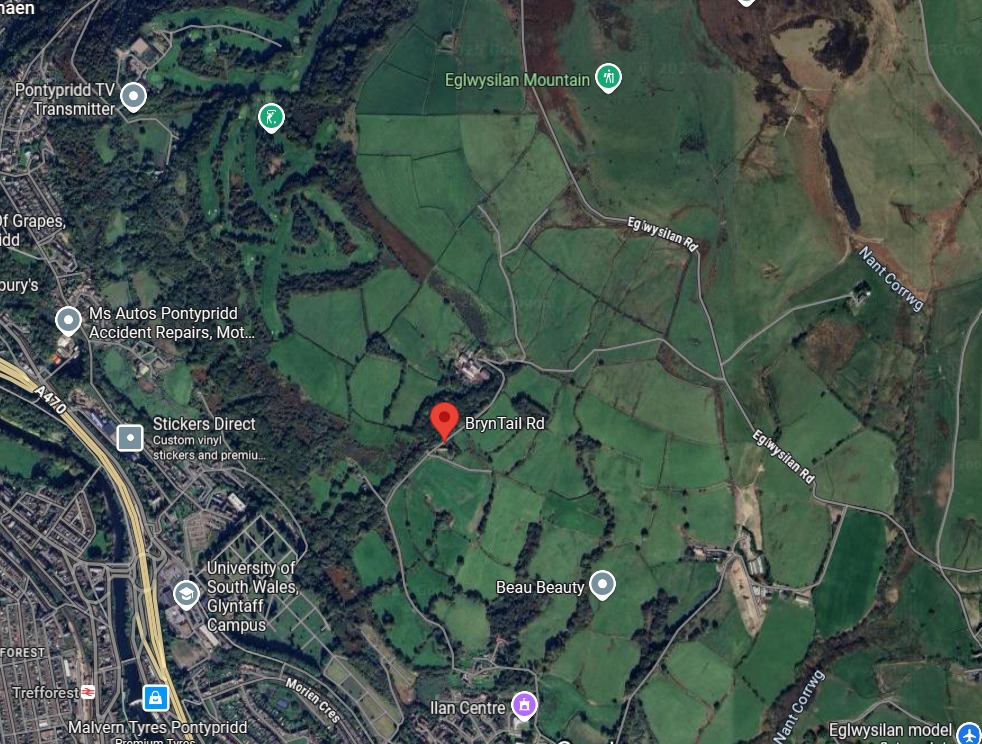
The development is situated on the upper slopes of Mynydd Eglwysilan, 800m to the east of Pontypridd town centre, around 300m to the north of Rhydyfelin, and around 310m to the northeast of Glyntaff.
It would cover 38 agricultural fields with 1,333 module racks of south-facing solar panels.
It would also include transformers, fencing, storage containers, a substation, monitoring houses, construction compound, and cable trenches.
The planning report says approximately 2.15% of the 70.9 hectare site would be taken over by the proposed development and approximately 97.75% would be kept for “landscape and biodiversity enhancement”.
It would generate and export energy to the grid for a period of up to 35 years after which it would be decommissioned and the land restored back to its current use and condition.
Construction will likely take in the region of 12-18 months, the report says.
The planning report concludes that: “The proposed development will have a negative impact in landscape visual terms; however, it is considered that these impacts could be reduced with the application of appropriate mitigation (i.e. screening).
“Whilst information has been submitted which suggests that the impacts of the proposed development on ecological interests and nature conservation can, with appropriate mitigation, achieve a neutral impact the council’s ecologist considers that the surveys undertaken are insufficient and that the biodiversity net gain report takes a blanket approach to biodiversity mitigation and enhancement with those proposed being inappropriate to the site and wider RCT context.
“As it currently stands the development would have a negative impact in this regard and the issue needs further consideration.
“In all other key respects, such as residential amenity and highway safety, it is considered appropriate mitigation can be implemented that would ensure there is no more than a neutral impact.”

It says that Future Wales 2040 and Planning Policy Wales clearly offer strong support for the provision of renewable energy projects across Wales, as does RCT’s own LDP (local development plan).
The report says that it is clear from the national policy documents that there is a strong presumption in favour of such projects to the point where adverse impacts have to be particularly severe for a refusal of consent to be justified.
It says that the adverse impacts in this case which will likely be the key determining factors for the PEDW inspectorate considered to be mostly related to visual impact and ecology.