

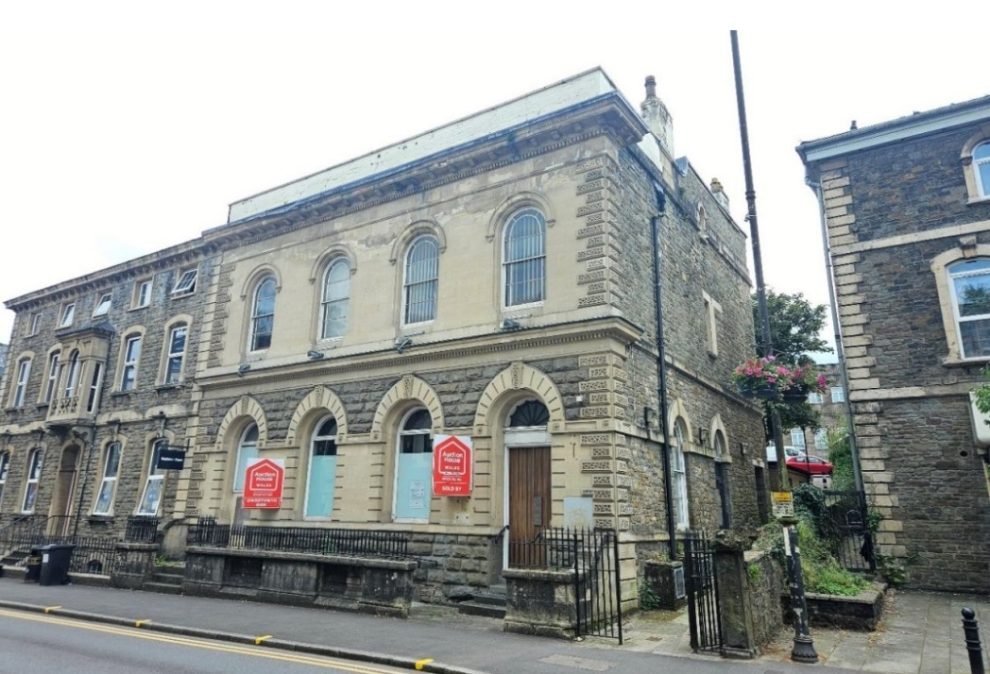

A FORMER bank that is to be converted to flats will now provide accommodation for up to nine people rather than six.
Permission was given for the conversion of the former Lloyds Bank building in Hanbury Road, Pontypool to six one bedroom flats in April last year with the ground floor former banking hall to remain in commercial use.
The building was granted grade II listed status in 1974 and is attached to Glantorvaen House which has the same statues. It was built between 1875-1878 to the designs of TR Lysaght of Bristol and described as a Victorian Italianate style office block.
Lloyds closed its Pontypool branch in 2019 and the building has been vacant ever since.
Torfaen Borough Council’s planning department has now agreed to a number of changes to one of the conditions of the listed building consent including the change from six, one-bedroom flats to three two-bedroom flats and three one-bedroom units.

Other changes relate to the internal layout of the building and replacing windows in the rear extension with UPVC frames, rather than aluminium.
The changes have been supported by the council’s heritage officer who said as a result there will be less blocking up of windows and openings on the ground floor and though one flat will “flow into the former banking hall” that isn’t considered “significant” as there will still be a “full width commercial unit” to the front.
The changes, which applicants Sian Sheppard and Joahna Wisniewsk-Mikulska of SJ Real Estate Holdings applied for, are also described as reducing the demolition required on the second floor with only minor internal changes to the first floor.
Heritage officer Ross Canon said: “Overall, these are positive refinements of the consented scheme, resulting in a reduced heritage impact.”
The council consulted 51 neighbouring properties on the change to the condition with three responses received which were all supportive and welcomed the investment in an “important Pontypool building” and also considered the alterations to be “more sensitive”.
The bank was originally constructed for and operated by The West of England and South Wales District Bank, founded in 1834 in Bristol.
Following rapid expansion the bank collapsed in 1878 with the liquidators blaming “imprudent lending”, partly to Welsh Iron companies though the bank’s owners were accused of fraud with a trial at the old Bailey in 1880.
Lloyds Bank took over branches of The West of England and South Wales District Bank in 1892 following its liquidation.