
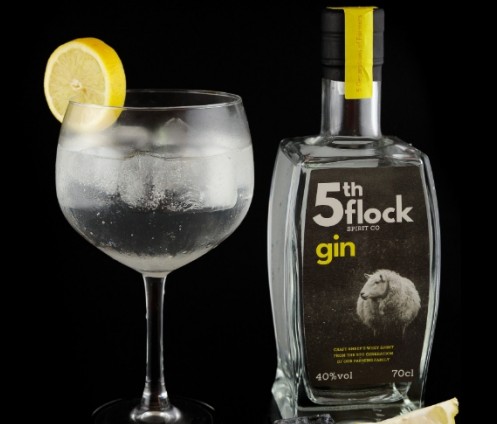

A CALL to keep a building which would partly be used a distillery at a Pembrokeshire farm which produces award-winning sheep milk-infused gin has been turned down by county planners.
In an application to Pembrokeshire County Council, Steven and Julie Ayers of Fifth Flock Spirits Ltd through agent Johnston Planning Ltd sought permission for the retention of a replacement building for farm diversification purposes incorporating a gin distillery with associated function/tasting room, reception area for farm businesses, including the distillery, a kennels and caravan site, along with offices and associated storage facilities at Nash Mountain Farm, Sardis.
Two previous similar 2024 and 2025 applications have been refused, the latest scheme removing some previous elements.
A supporting statement said the building would be used for farm diversification purposes for a number of established rural enterprises on the holding “but primarily in connection with Fifth Flock Spirits Ltd, a family run drinks company specializing in gin infused with milk derived from the resident flock at Nash Mountain”.
It said the 2023-erected building had replaced an earlier long-standing dilapidated farm building on the site, and is intended to play host to the three established farm enterprises which are run in conjunction with the main agricultural operation: Nash Mountain Kennels, Nash Mountain Caravan and Camping Site and primarily Fifth Flock Ltd.

It said internal works had yet to be completed, and, in addition to the retention of the building, the application also seeks permission for some external works which have not yet been carried out.
The statement said the Ayers family has farmed at 26ha Nash Mountain, which has a flock of 168 East Friesian sheep, for some five generations, the limited acreage meaning “the agricultural mainstay is not sufficient to sustain a viable business,” leading to the farm diversifications, with Fifth Flock the latest.
It said, in addition to the main farming operation, Nash Mountain also gains income from an on-site wind turbine, a caravan site, a boarding kennels with cattery, and Fifth Flock Ltd.
On the gin side, the statement says: “Fifth Flock Spirits Ltd Fifth Flock has operated from Nash Mountain since August 2025. It is at core currently a drinks enterprise based on the production of gin and rum infused with sheep’s milk, however, as set out in the accompanying business plan, the intention is to expand the offer into other sheep-based products to capitalise on the home flock.
“Since launching the enterprise has exceeded expectations with strong demand and accolades including A Taste of Pembrokeshire Award at the Pembrokeshire Food and Farming Awards in December 2025.
“Firth Flock currently source their gin from an independent distillery in Gorgeddan, Ceredigion however the intention, as reflected in this submission, is to develop the distilling element on-site and include it as part of an immersive visitor experience focussing on the home flock.
“Firth Flock has rapidly become a cornerstone of the enterprise at Nash Mountain and whilst the building at the centre of this proposal may have been premature there is a strong case for its retention as part of the overall rural enterprise on the holding.”
It adds that the Ayers are actively exploring diversification into other wool and sheep-based products.
The application was refused on the grounds including it was not demonstrated a countyside location was needed and there was not “sufficient evidence of a genuine and established rural enterprise necessitating the development,” adding: “In particular, the primary distilling process does not currently take place at the site and instead relies on off-site production, with only a future aspiration to relocate such activities.
“As a result, the proposal represents a speculative form of development that lacks a clear and direct functional link to the agricultural holding.”

It went on to say the scale of the proposals “introduces a level of intensity and built form more akin to a standalone commercial or tourism enterprise, rather than a modest farm diversification scheme”.