

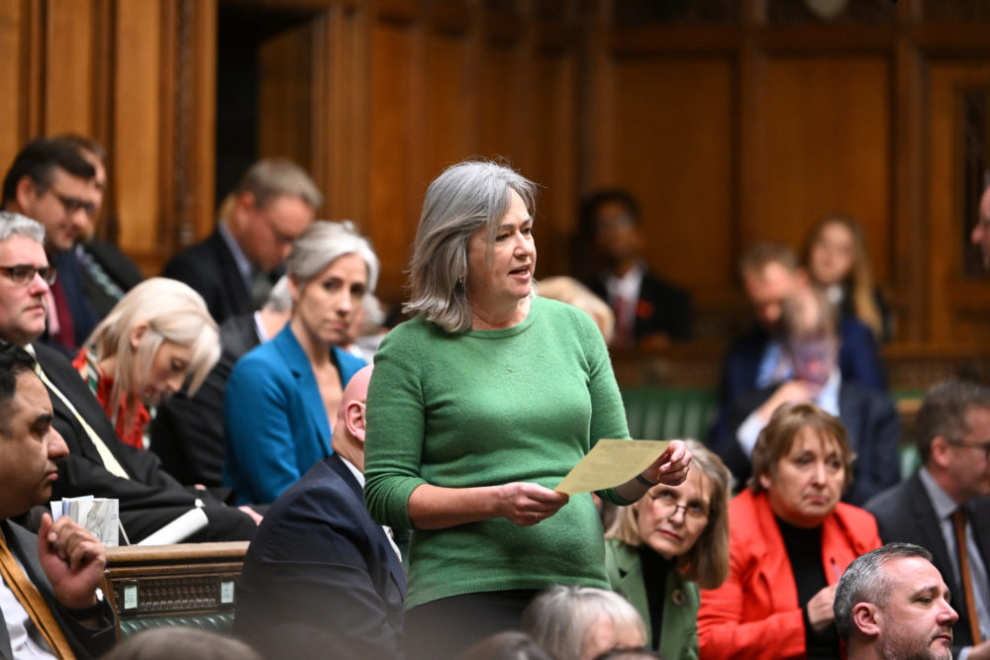

PLAID CYMRU’S Westminster leader, Liz Saville Roberts MP, has called on the UK Government to abandon policies she says unfairly penalise Welsh communities and instead pursue a taxation system that ensures the wealthiest individuals and biggest corporations contribute more.
Raising the issue in the House of Commons on Monday, Ms Saville Roberts criticised Chancellor Rachel Reeves’ early fiscal plans, which include raising Employer National Insurance Contributions and potential cuts to the Winter Fuel Payment and disability benefits. She warned these measures would have a disproportionate impact on vulnerable people in Wales.
“Plans to plunder disability benefits and the decision to hike National Insurance are examples of policies which disproportionately hit Welsh communities,” she said. “Instead, we need fair policies like a wealth tax on assets over £10 million, ending government subsidies for the oil and gas giants and clamping down on tax evasion.”
Ms Saville Roberts argued that introducing a 2% levy on wealth exceeding £10 million could generate up to £24 billion annually, a move she suggested would not only raise vital funds but do so more equitably. She also urged the Government to end subsidies to fossil fuel companies and tighten measures against tax avoidance.
Challenging the Government’s priorities, she pressed ministers to embed fairness into fiscal policy: “So when will the Government’s fiscal rules enshrine fairness where the ultra-wealthy and large corporations pay their fair share?”

Responding on behalf of the Treasury, Chief Secretary Darren Jones MP defended the Government’s approach. He pointed to reforms to the non-domiciled tax status and new levies such as VAT on private school fees and increased taxation on private jet travel.
“I think the Honourable Lady has missed the fact that this Government has changed the non-dom tax status — these are the wealthiest people in our country for many years,” Mr Jones said. “It’s more expensive now to fly a private jet than under the former Prime Minister opposite.
“And as a consequence of the decisions the Chancellor took at the Budget last year, we’ve given the largest real-terms increase in spending to Wales since devolution began. And as a consequence of our reforms to the Bill coming on Wednesday, we’ve increased the base rate of Universal Credit for the first time in many, many years.”
The exchange comes amid wider debates over how the new Labour Government plans to address public finances without deepening inequalities, particularly in regions like Wales that have long faced economic disparities.