
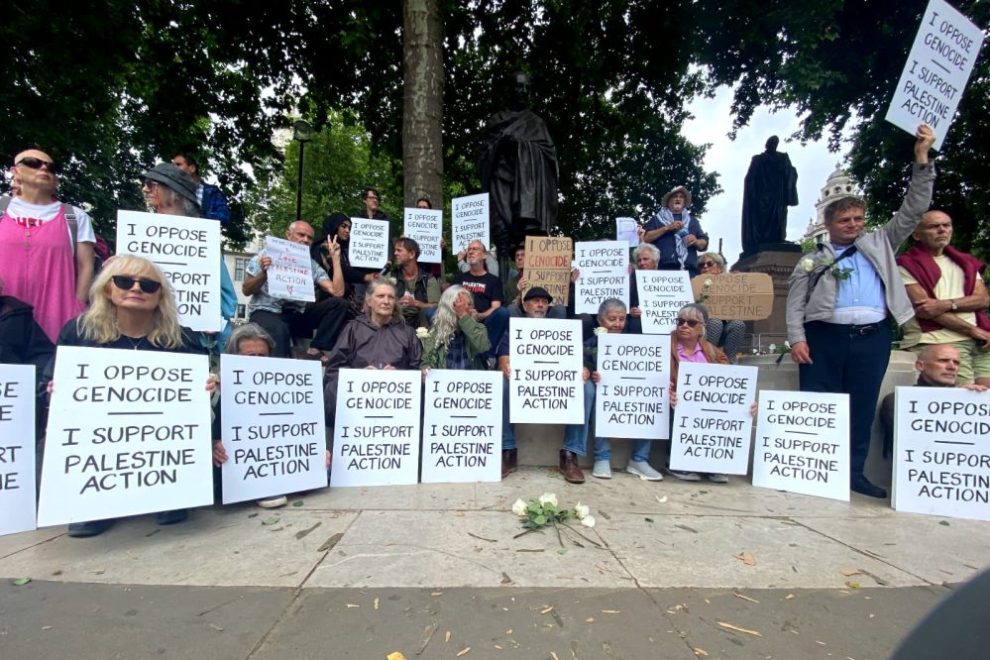

THE UK’s recent decision to proscribe Palestine Action as a terrorist group has sent shockwaves through civil society, human rights communities, and activists across the country. It marks the first time in decades that a direct action protest group — one without any record of armed violence or fatalities — has been placed on the same legal footing as recognised terrorist organisations.
At the centre of this development stands Home Secretary Yvette Cooper, who made the designation under the Terrorism Act 2000, citing “serious criminal damage” and “threats to life.” While Palestine Action’s tactics — such as vandalism, occupation of weapons factories, and paint-splash protests — are indeed confrontational and often unlawful, the government’s framing of them as terrorism has prompted widespread criticism. Legal observers note that the bar for terrorism under UK law has never before included this type of civil disobedience.
What complicates this decision further is the financial relationship between senior Labour politicians and pro-Israel lobbying interests. According to Declassified UK, at least 13 members of Keir Starmer’s shadow cabinet — including Yvette Cooper — have received substantial financial backing from groups and individuals with strong pro-Israel affiliations. Cooper, specifically, has been reported to have received over £215,000 in related donations over the past year. The sources include supporters of Labour Friends of Israel, a group that maintains close ties with the Israeli embassy and has historically downplayed concerns over Palestinian human rights.
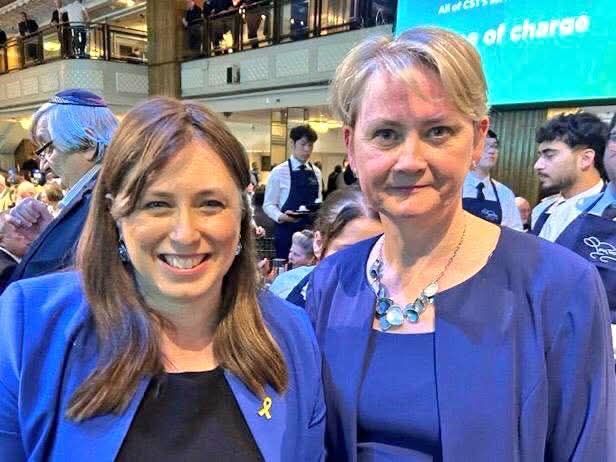
Photographs from public events — such as one showing Cooper standing beside Israeli Ambassador Tzipi Hotovely — underscore how closely aligned many senior UK politicians have become with the Israeli diplomatic and lobbying apparatus. Hotovely, known for her hardline views and defence of Israeli settlement expansion in occupied territories, is a deeply controversial figure internationally. That her presence at UK political functions is treated as unremarkable speaks volumes about the current climate.
There is no suggestion that any laws have been broken — political donations of this kind are entirely legal in the UK and are disclosed on the parliamentary register. But legality is not the only test of ethical governance. The public has a right to ask: how much influence do these donations exert over foreign policy, protest law, and decisions such as the proscription of Palestine Action?

The timing of the move is significant. It comes amid growing public anger over the UK’s support for Israel during its military operations in Gaza, which have led to thousands of civilian deaths and accusations of war crimes by leading international legal bodies. Suppressing protest in this climate, while maintaining financial and diplomatic ties to one side of the conflict, sends a chilling message about the health of UK democracy.
Protest is not meant to be polite. It is meant to be disruptive — particularly when traditional political channels fail to deliver justice. When that disruption is met with the full force of anti-terror laws, the line between a liberal democracy and a securitised state begins to blur.
In a functioning democracy, it is crucial that political decisions are not only lawful, but seen to be made in the public interest — not under the shadow of financial allegiance or foreign policy alignment. The case of Palestine Action raises hard questions about who gets to dissent in Britain — and at what cost.