

DONALD TRUMP’S claim that Nato allies in Afghanistan “stayed a little back… a little off the front lines” is not merely inaccurate. It is morally careless — and in Wales it lands like an old wound being torn open.
Afghanistan was not an abstract foreign policy debate for this country. It was a roll call of funerals, amputations, trauma and lives reshaped in an instant. The conflict claimed 457 British service personnel, and Welsh regiments were repeatedly deployed into some of the most dangerous ground in Helmand Province, where roadside bombs, ambushes and close-quarter fighting were part of daily routine.
When a leader speaks loosely about who did — and didn’t — stand on the line, they are not scoring points in a spending argument. They are talking about the dead. And in Wales, names are not statistics.
Lance Corporal Christopher Harkett, of 2nd Battalion The Royal Welsh, was killed by an explosion on patrol near Musa Qala in March 2009. Private Richard Hunt, also of 2nd Battalion The Royal Welsh, died from wounds suffered in an explosion while on a vehicle patrol near Musa Qala in August 2009. Their families did not lose sons in a “rear area”.
That is why the political reaction in the UK has been so blunt. Prime Minister Keir Starmer described the remarks as “insulting and frankly appalling” and said an apology would be the minimum standard if he had spoken that way. Across party lines, the criticism has been clear: this was a distortion that dishonours service.

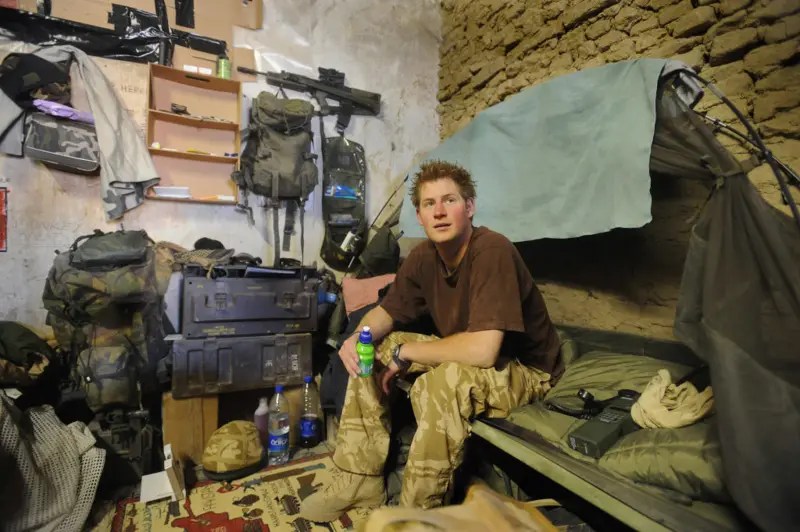
Prince Harry’s response carried weight precisely because it avoided the usual political noise. He didn’t name Trump. He didn’t turn it into a culture war. He simply stated what soldiers and families know: allies answered America’s call after 9/11, friends were made, friends were lost, and those sacrifices “deserve to be spoken about truthfully and with respect”.
The facts are not complicated. Nato’s collective defence clause — Article 5 — was invoked after the attacks of September 11, 2001. Allies joined the mission, fought, and died. The idea that they mostly hovered at the margins collapses under even the most basic measure of coalition sacrifice: casualties, deployments, combat operations and the testimony of those who served alongside each other.
Yes, the United States spends more on defence than any other Nato member. Burden-sharing is a legitimate argument. But spending figures do not give anyone permission to rewrite the history of a war. You can press allies to invest more without pretending they did not fight. And you can debate budgets without casually wounding people who have already paid the highest price.
The damage here goes beyond offence. It is strategic. Alliances are held together by trust — by the belief that when one nation bleeds beside another, that sacrifice will be remembered honestly. When a US president suggests allies would not show up, or implies they did not show up properly last time, he weakens that trust and offers an easy gift to any rival watching for division.
An apology would not be weakness. It would be leadership. It would sound like this: I was wrong. Allied troops fought and died alongside Americans. I honour their service and the families who carry the grief. We can argue about spending without questioning courage.
Because the fallen do not get to reply. Their families in Welsh communities do. Their comrades do. And when the truth is treated as optional, so is the respect that keeps a military covenant intact.