

OPINION – By Tom Sinclair, Editor
THE KING is not a politician. He is, however, the Commander-in-Chief of the British Armed Forces. That distinction matters, because it draws a line between everyday diplomacy and something more fundamental: respect for service, sacrifice, and the people this country asks to stand in harm’s way.
On that basis, the scheduled state visit to the United States in April should not go ahead as planned. It should be postponed indefinitely — and the reason should be made clear, quietly but firmly: Britain will not wrap ceremonial honour around rhetoric that demeans those who serve.
That is the crux of it. The issue is not a petty spat, a bruised ego, or an argument about “who said what” on social media. It is the principle of how allies speak about allied forces — and whether the United Kingdom is prepared to smile, toast and wave through remarks that, in the eyes of many serving personnel, veterans, and military families, amount to a straight insult.
You can hear it in the public reaction. People who would rarely write to a King or comment on foreign policy are suddenly saying the same thing in plain language: if the Head of the Armed Forces carries on regardless, it feels like a slap in the face to those who “stood the line” — and to the families of those who did not come home. Some are calling for a postponement “until there is an apology”. Others say: don’t postpone — cancel. Underneath the anger, there is a consistent instinct: dignity matters, and so does loyalty.
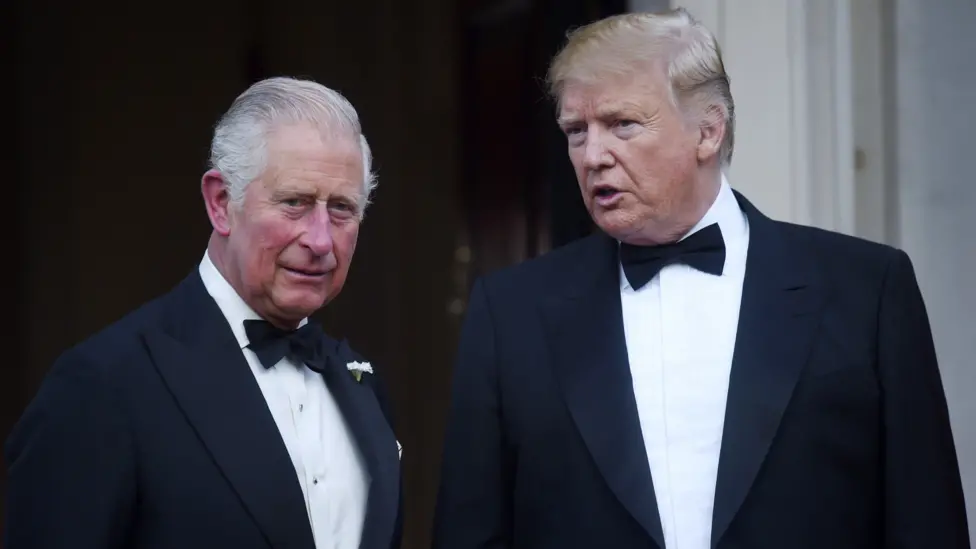
Now add the awkward history. Not so long ago, Donald Trump received the full ceremonial treatment in Britain. A banquet. The gold-trimmed theatre of state. All presented as diplomatic necessity, above politics, in the national interest.

Did it work? Did it moderate language, build respect, reduce volatility, improve conduct? If anything, it taught the opposite lesson: that Britain will keep offering prestige even when it gains nothing in return. The Crown’s soft power was put on display, and the recipient treated it like another trophy.
That is why doing it again now would be worse than a mistake. It would be a pattern.
Supporters of the trip will reach for the familiar argument: Britain’s relationship is with the United States, not with one individual. And that is correct. Defence, intelligence, trade and security cooperation are too important to be thrown around as gestures.
But a state visit is not the machinery of government. It is the highest honour we can confer. It is symbolism in its most potent form. It is an embrace.
And there is a difference between continuing diplomacy and offering ceremony.
Britain can and should continue the serious work through ministers, ambassadors, defence chiefs and officials. That work is robust enough to survive a postponement of pageantry. What it cannot survive — at least not without cost — is the impression that the country’s top symbol of service is prepared to overlook contempt directed at service.
There is also a constitutional realism that needs saying out loud. The King does not freelance. He acts on ministerial advice. That means the responsibility for this does not sit with one man in one palace. It sits with the government of the day. If the visit goes ahead, it will not be interpreted internationally as a “neutral royal engagement”. It will be interpreted as a British national choice.
Which raises a simple question: why would Britain choose, voluntarily, to place its Commander-in-Chief into the middle of America’s partisan furnace — where every handshake becomes a headline and every photograph becomes a message?
The monarchy’s strength is that it is not supposed to take sides. Yet the more polarised the environment, the harder neutrality is to maintain. A state visit in April risks being treated as an endorsement by one camp and a provocation by the other. That is not only unfair to the King; it is dangerous for the institution. No head of state should be used as a campaign prop, least of all one whose constitutional role depends on being above the fight.
So what should happen?

The government should advise postponement on grounds that are unarguable and non-partisan: respect for allied forces and the need to keep the Crown out of domestic political controversy abroad. The Palace should keep the language measured: a desire to reschedule at a more appropriate time, in a way that reflects the enduring UK-US relationship and the importance of mutual respect between allies.
And if there is to be a condition for reinstating the visit, it should be simple: a clear, public reaffirmation of respect for NATO service personnel and the sacrifices made by military families. Not a grovelling performance. Not a media circus. Just a statement of basic decency that any ally should be able to make without choking on it.
Some will say Trump never apologises. That may be true. But the point is not to choreograph an apology. The point is to stop granting honours as if they are automatic.
Because Britain has already tried the “butter him up and hope for the best” approach. We’ve seen the banquet. We’ve watched the pageantry. We’ve heard the rhetoric continue.
At some stage, a grown-up country has to decide what it will and won’t dignify.
If the King is the head of our armed forces in name, then he must be the head of our armed forces in meaning too. That means he cannot be asked to raise a glass to a man whose words have demeaned the very people the Crown is meant to honour.
Postpone the state visit. Keep the diplomacy. Protect the institution. And, above all, stand by the men and women who stood for us.