

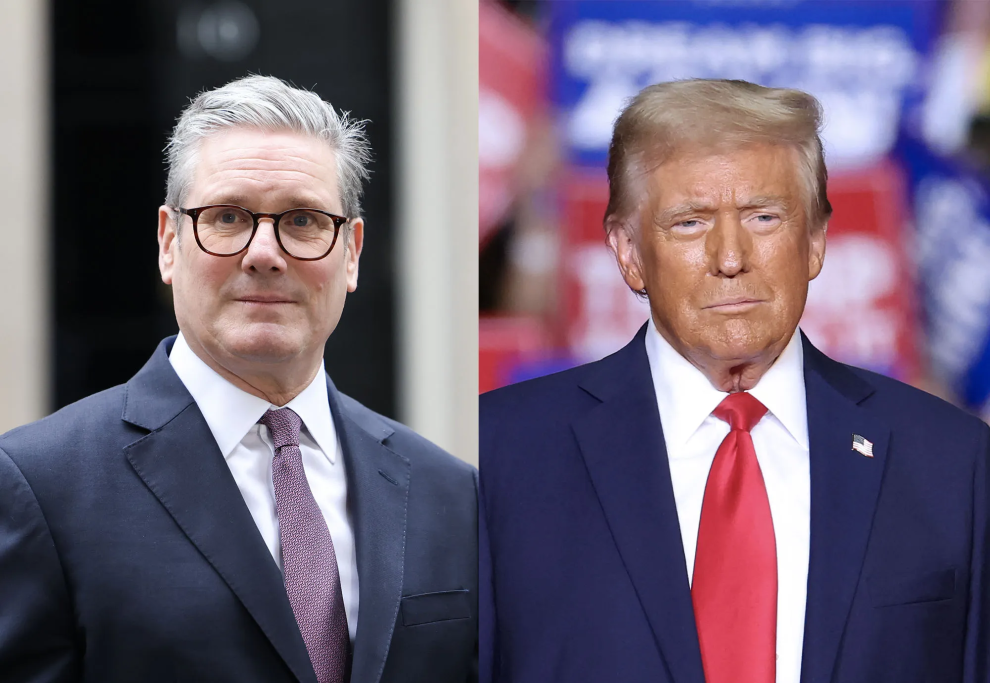
PRIME MINISTER Keir Starmer has described Donald Trump’s decision to drop threatened tariffs over Greenland as “good news” and said the “hard yards” of building a consensus on Arctic security can now begin.
The prime minister welcomed Mr Trump’s sudden shift in tone while speaking to residents at a village hall in Hertfordshire, as the diplomatic crisis that rattled transatlantic relations over the past week appeared to ease.
“I think you will have noticed that the last few days have been incredibly serious in relation to big things happening on the world stage,” Sir Keir said. “And you may have seen that it is a good thing that yesterday the threat of tariffs against the United Kingdom was lifted and now we can start the hard yards of finding a way forward on security in the Arctic.”
He stressed that, although remote, Arctic security matters for the safety of the UK and its allies, and that British pragmatism, common sense and adherence to core values had helped defuse the immediate danger of a transatlantic trade confrontation.
Sir Keir said he had not spoken to Mr Trump since the tariff threat was withdrawn, but expected to do so “very soon”.

The US president rowed back from his earlier stance following talks in Davos with Nato secretary-general Mark Rutte. Mr Trump said they had agreed “the framework of a future deal” covering security in the Arctic region — a development that prompted him to scrap planned tariffs of 10% on British and other European imports that were due to kick in on 1 February.
Mr Trump’s shift followed days of escalating rhetoric. He had initially threatened steep tariffs, rising to 25% by June, on eight European allies, including the UK, unless Denmark agreed to sell Greenland to the United States — a move that was rejected outright by Copenhagen and many European capitals.
Denmark’s prime minister, Mette Frederiksen, has repeatedly affirmed that the future of Greenland is a matter for its people and the Kingdom of Denmark alone, insisting that sovereignty is not up for negotiation.
Nato’s Rutte has emphasised that enhanced collective Arctic defence was the priority of the so-called framework agreement, although detailed planning is expected to be taken forward by military commanders with implementation targeted for early 2026.
European responses have been mixed: while markets breathed a sigh of relief at the tariff climbdown, some leaders voiced distrust of the stability of US policy, and the European Commission said it was preparing a package to bolster Arctic security cooperation independent of bilateral pressure tactics.
Back in Westminster, Sir Keir has been unequivocal that the UK will not be coerced on its principles. In the Commons he said threats of tariffs to pressurise allies were “completely wrong” and stressed that decisions on Greenland’s future must be taken by its inhabitants and Denmark.
He was due to host Ms Frederiksen in London later on Thursday, reflecting efforts to strengthen diplomatic ties with Denmark and other European partners after an extraordinary week of transatlantic tension.