

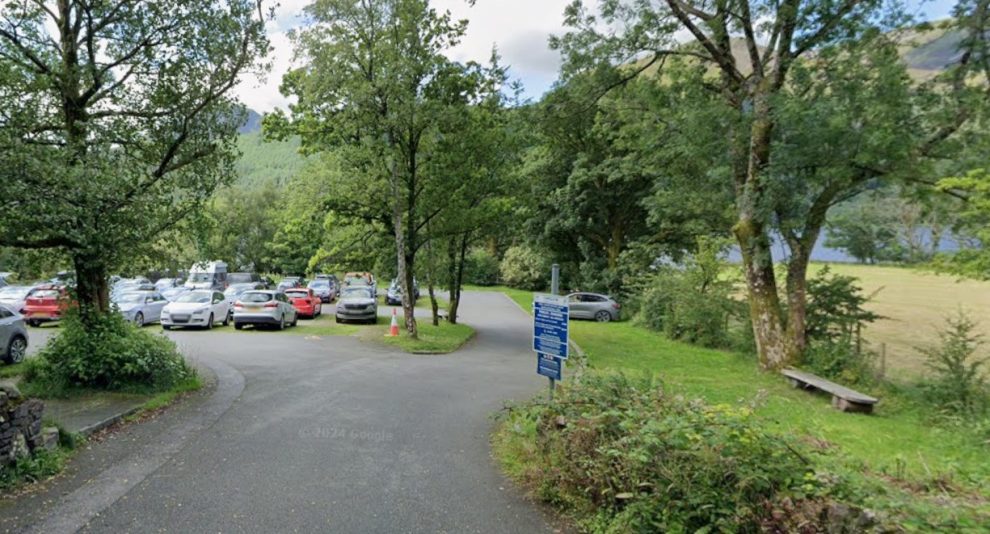

“UNPLEASANT” portable loos at the start of one of Yr Wyddfa longest-serving walking routes will be replaced.
Eryri National Park Authority have agreed to replace the three toilet units currently in operation at the Llyn Cwellyn car park at Rhyd Ddu.
The current toilet provision at Cwellyn was “unpleasant in hot/humid weather” and there was no running water, the national park had said.
The facilities were also “wholly reliant on chemicals” to sanitise and deodorise the portable units.
Now, the planning and access committee has agreed to install two environmentally friendly ‘cesspit’ style ‘zero discharge’ replacement loos – one timber clad, one steel clad – and to develop external waterless urinals.

The car park provides for visitor parking to access the popular Llyn Cwellyn Snowdon Ranger route up Yr Wyddfa, and to access the adjacent lakeside boardwalk and picnicking area. The Snowdon Ranger Hostel is also located just opposite.
The Snowdon Ranger route is believed to be the earliest of the six main routes to the summit of Yr Wyddfa. It starts at the shore of Llyn Cwellyn, giving the path its Welsh name of Llwybr Cwellyn (Cwellyn Path).
It climbs gradually to the slopes of Moel Cynghorion and over to Bwlch Cwm Brwynog before climbing steeply above Clogwyn Du’r Arddu eventually merging with the Llanberis Path to the summit.
The plans, which had been recommended for approval, were accepted at the meeting on Wednesday, January 21.
The zero discharge toilets are proposed to sit behind an existing stone screen wall.
“They require at least twice weekly service to empty the waste and replenish the chemicals during the peak season,” a report said.
“This has a significant direct and indirect carbon footprint in the transportation of waste, treatment off site as well as the production and transport of chemicals for sanitation.”
The plans also described how the proposal has been designed to ensure “environmental benefits” as no chemicals are needed.
The new system was also a more “sustainable option” due to the fill rate being slow, meaning fewer trips to empty the tanks.
“Based on current use the proposed tanks will require emptying three times a year which is significantly less than the current situation,” a report noted.

At the meeting it was also confirmed that the new loos were designed to be accessible.
A report also noted they were set to provide better provision for visitors, be more environmentally friendly, lower maintenance and offer better ease of access and emptying.