

WALES’ NHS continues to face significant strain in urgent and emergency care, with the latest NHS Activity and Performance Summary for December 2025 and January 2026 showing that pressures persist even amid reductions in longer treatment waits.
Waiting times and emergency care performance
Recent Welsh Government data confirm that NHS waiting lists fell for the seventh consecutive month, reaching their lowest level since March 2023. The number of patients waiting more than two years for treatment dropped by around 92.5%, with fewer than 5,300 people in this category in December 2025. Average treatment waiting times have also declined.
Despite these improvements, pressures remain acute in emergency care:
- Emergency department attendances averaged around 2,853 per day in January, slightly higher than in December.
- Performance against the four-hour A&E standard — where 95% of patients should be seen, admitted, transferred, or discharged within four hours — remains well below target, although there was a month-on-month improvement.
- The number of patients spending 12 hours or more in emergency care has increased, highlighting ongoing capacity challenges.
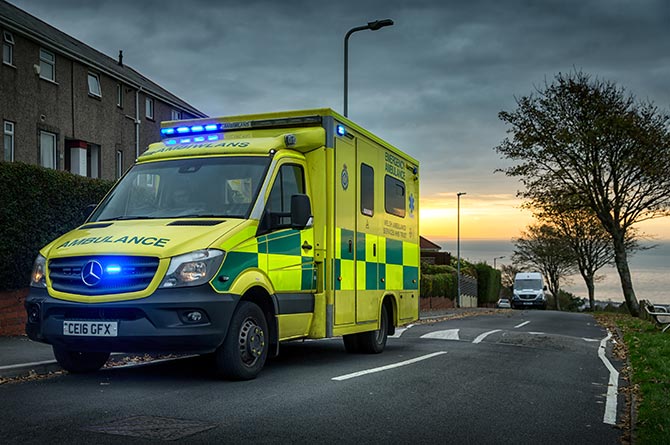
- Ambulance response times remain under pressure, with provisional data showing a median Red call response of 9 minutes 33 seconds in January, exceeding the NHS target of 6–8 minutes. The 90th percentile for Red calls also remains high at 22 minutes 48 seconds, representing the longest waits for the most critical patients.
Government position
First Minister Eluned Morgan welcomed the latest figures, highlighting progress in reducing long waits and overall waiting list volumes. She said the data demonstrates that the Welsh Government’s plan to cut long waiting times and deliver more outpatient appointments “is working” and making “a massive difference to people’s lives.”
The Welsh Government has also invested in urgent care capacity. In February 2026, it announced a £23.1 million investment in the Welsh Ambulance Services University NHS Trust fleet, including 50 new emergency ambulances and additional vehicles to modernise and improve reliability. Health Secretary Jeremy Miles said the investment is essential to ensure emergency help is “on the way” when people dial 999.

Political and opposition responses
The latest NHS performance data has generated criticism from opposition parties.
The Welsh Conservatives, under leader Darren Millar MS, described the figures as evidence of systemic failure under the current government. They argue that performance against the four-hour A&E target remains poor, with many patients waiting well beyond recommended times. The party has called for a “health emergency” to tackle waiting times and improve emergency care.
Plaid Cymru has also used the figures to call for reform. In Senedd debates earlier in February 2026, party members raised concerns about governance and performance at major health boards, particularly Betsi Cadwaladr University Health Board, which has faced persistent challenges and spent over three years in special measures. Plaid Cymru’s health spokesperson called for stronger accountability and strategic change across NHS Wales.
Ongoing challenges and system context
Although overall waiting lists have declined, diagnostic waiting lists in Wales reached record highs in December 2025, reflecting capacity constraints in imaging and other tests critical for diagnosis and treatment planning.
An independent review of urgent and emergency care also highlighted structural issues affecting ambulance and A&E performance. Delays are not solely due to rising patient demand; system bottlenecks, including hospital flow challenges and limited social care capacity, also contribute to longer waits.