

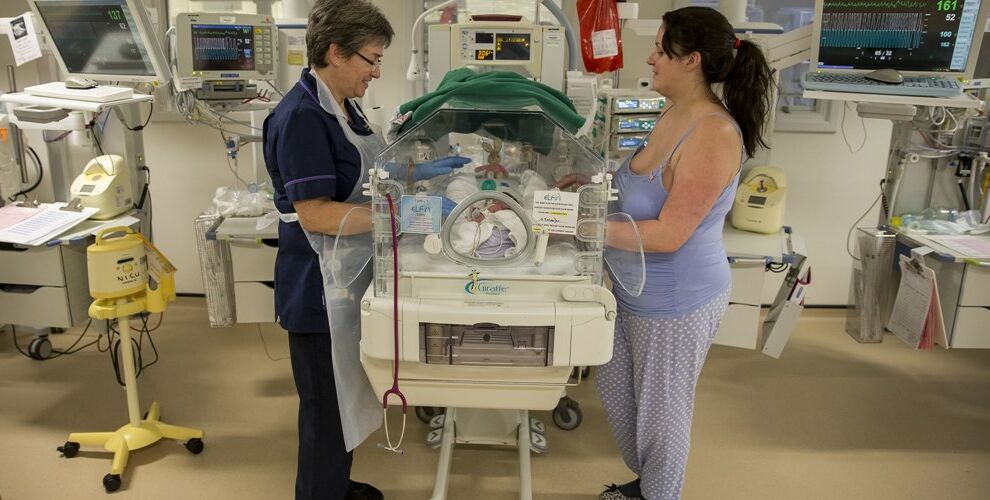

All-Wales review ordered after harrowing report reveals repeated failures
A NATIONAL review of maternity and neonatal care in Wales will begin this month, following a damning independent report into repeated failings at Swansea Bay University Health Board which left families grieving, traumatised, and demanding urgent reform.
Health Secretary Jeremy Miles confirmed on Tuesday (July 15) that the Welsh Government will accept all 11 recommendations from the report and has escalated Swansea Bay’s maternity and neonatal services to Level Four — the second-highest level of intervention. The announcement comes as families continue to speak out about avoidable harm, traumatic births, and failures in care between 2018 and 2023.
Among them is Gareth Morgan, 39, whose son sustained a brain injury during birth at Singleton Hospital. His wife, who was being treated for sepsis, underwent an emergency caesarean section. Their baby required intensive care.
“It was probably one of the worst points of my life as I thought both my son and my wife were going to die that day,” Mr Morgan said. It was not until a year later — and only after the health board wrote advising him to seek legal advice — that he learned of serious failings in his wife’s care.
“You go from thinking it was just bad luck to being angry and you want to find people accountable,” he said. “I’m riddled with trauma. Our family is riddled with the negative experience of what’s happened.”
Mr Morgan has now called for systemic changes, saying: “This isn’t about us as a family. This is about the wider picture. Because ultimately if you’re not changing something… then you’re complicit.”
Harrowing testimony, systemic problems
The independent review, led by Dr Denise Chaffer, found serious and repeated failings in both clinical care and the governance of services. It concluded that while many women had a positive experience, too many others reported traumatic births, lack of compassion, being ignored by staff, and enduring long-lasting psychological harm.
Failures highlighted include:
- Poor communication and cultural insensitivity
- Staff failing to listen to women during labour
- Inadequate foetal monitoring
- Delays in emergency responses
- A rigid and insensitive complaints process
The review also called for rapid access to psychological support for affected mothers and birthing partners, better triage systems, trauma-informed care, and compulsory training for maternity staff.
Despite some recent improvements in staffing, the report noted that turning high-level changes into visible frontline progress remains “a challenge”.
In December 2023, Healthcare Inspectorate Wales found Singleton Hospital’s maternity unit had failed to meet safe staffing levels over four years and lacked effective security to prevent baby abductions. Following public criticism and mounting complaints, the first chair of the maternity review resigned, prompting a broader and more transparent inquiry.
Llais, the national body representing patients in Wales, carried out its own investigation earlier this year, speaking to over 500 women. Its findings echoed the official review: widespread failures at every stage of maternity care, often resulting in long-term trauma and some women deciding not to have more children.
Welsh Government response
In his statement, Jeremy Miles issued an “unreserved apology” to all families let down by the health board and promised that lessons would be learned.
“This must never happen again,” he said. “All women and babies must receive good-quality, safe and compassionate care. Their voices must be heard during pregnancy and birth and they must be included in plans to improve services.”
An all-Wales maternity and neonatal services assessment, independently chaired, will begin this month and incorporate findings from Swansea Bay and other reviews across the UK, including the ongoing England-wide inquiry into maternity failings.

‘A call to action’
Dr Chaffer said the health board must continue to act at every level to rebuild trust and improve care.
“There is still much to be done… this report serves as a call to action,” she said.
Liz Rix, Executive Director of Nursing at Swansea Bay, accepted the findings in full and apologised. “The review does acknowledge some improvements… but there is more to do,” she said. “We will now develop an improvement plan and continue to listen to women and families.”
Midwives and campaigners urge action
The Royal College of Midwives described the Welsh Government’s response as a “significant step forward,” but warned that proper staffing and investment were urgently needed.
“This is owed to the families who have suffered unbearable loss,” said Julie Richards, RCM Director for Wales.
The Herald understands that while several internal audits had flagged problems within the health board over the past five years, decisive action was repeatedly delayed — contributing to ongoing harm.