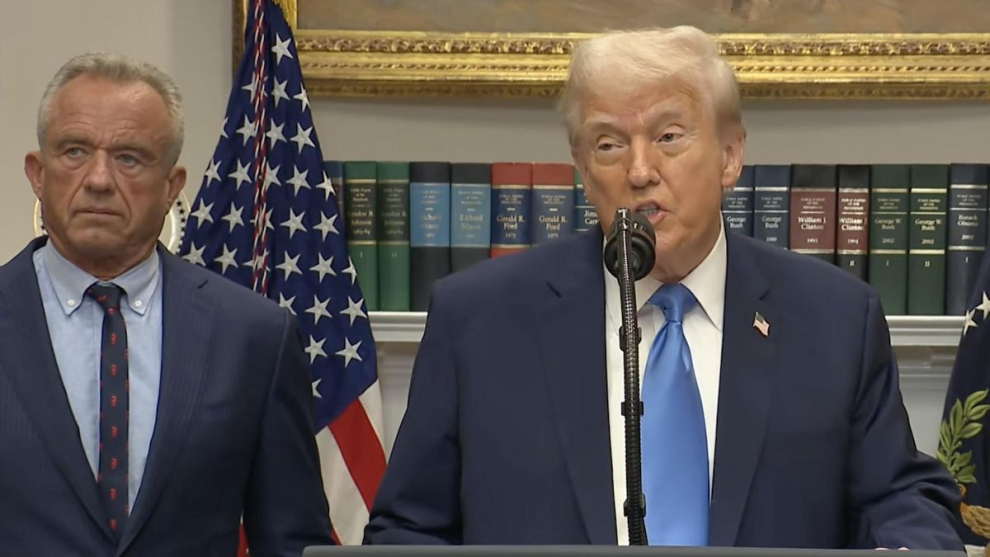

The headlines blaring from America this week – that paracetamol, or Tylenol as it is branded across the pond, “causes autism” – are nothing more than political theatre. The claim, delivered by Donald Trump as if it were settled fact, is not supported by credible science. Yet it has dominated the news cycle, which is rather convenient for a presidency facing real and pressing problems.
Let’s be clear: paracetamol remains one of the most widely used and trusted medicines in the world. Doctors prescribe it for pain and fever in pregnancy precisely because it has been considered safe when used responsibly. The UK’s NHS, the American College of Obstetricians and countless researchers say the same thing: no causal link has been proven between paracetamol and autism. Associations have been reported in some studies, but when you strip out confounding factors like genetics and family environment, the link disappears.
So why the sudden alarm? Politics. Trump has always thrived on culture wars and manufactured outrage. By conjuring up a health scare – one that plays on parents’ worst fears – he seizes headlines and distracts attention from uncomfortable realities, whether that’s the economy, foreign policy stumbles, or his own legal and political troubles. It is an old trick: when the news is bad, change the subject.
And this is not the first time he has dabbled in quackery. Who could forget April 2020, when Trump publicly mused about whether disinfectant or bleach could be injected into the body to “clean” COVID-19 away? Poison centres across the U.S. saw a spike in calls afterwards, and doctors were left horrified at the suggestion. He later claimed he was joking – but the damage was done.
His choice of Health Secretary only deepens the sense of unease. Robert F. Kennedy Jr. has spent years as one of America’s loudest vaccine sceptics, questioning mainstream immunisation programmes and promoting discredited theories. Medical associations and public health experts warned that putting him in charge of U.S. health policy would risk undermining confidence in vaccines and public health itself. Yet here he is, steering the ship.

And then there’s the setting. Trump chose to make his big autism–paracetamol pronouncement at the memorial service of right-wing activist Charlie Kirk. Funerals are usually moments of quiet reflection, not platforms for sudden, headline-grabbing policy claims. The decision to insert a controversial health announcement into such a solemn occasion only added to the sense that this was less about science and more about spectacle.
The tragedy is that millions of people who rely on paracetamol are now left second-guessing a safe and effective medicine. Expectant mothers, already navigating a minefield of advice, could be scared off from treating fevers – which themselves can be far more dangerous to an unborn baby than the tablet Trump is railing against.
In truth, there is no “huge announcement” here, only a huge distraction. The science does not back Trump’s words, and the timing reeks of political calculation. The real public health threat is not paracetamol – it is the misuse of medical research, the undermining of trust in vaccines, and the willingness of a president to exploit health fears for his own political ends, even at a funeral.