
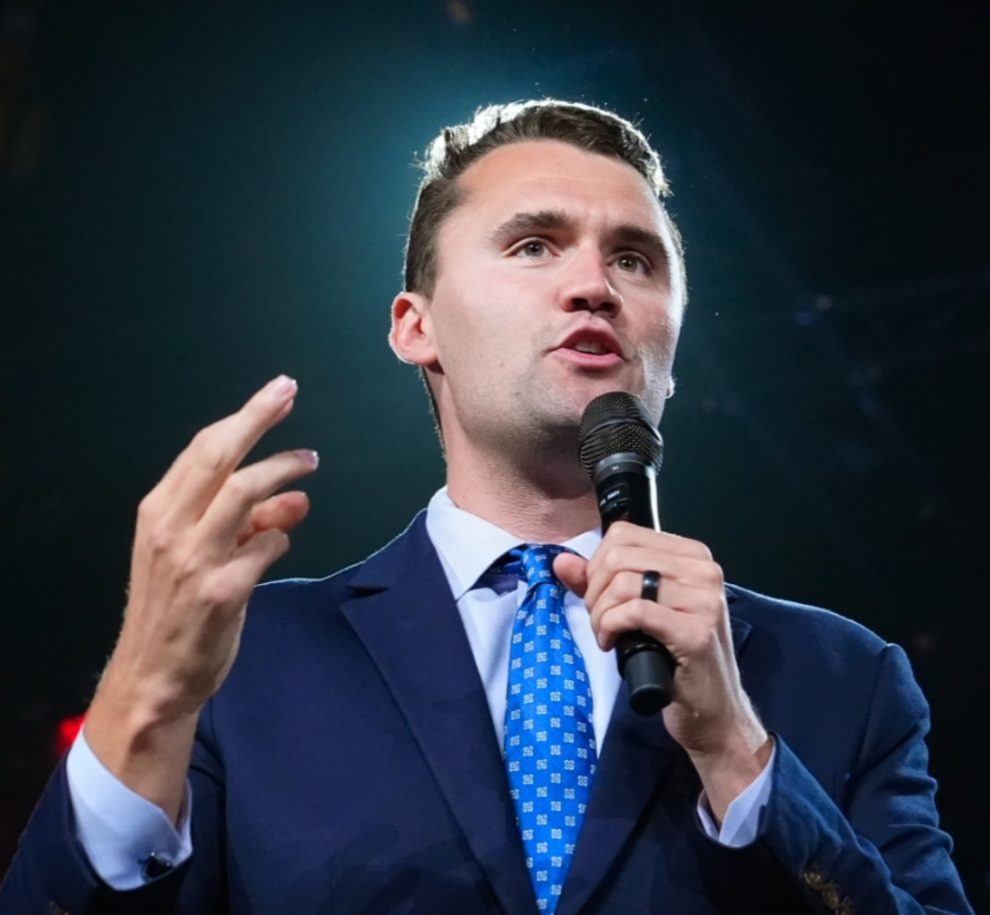

THE ASSASSINATION of conservative activist Charlie Kirk should have been a moment for national mourning, reflection, and unity. Instead, it has quickly become something darker: a springboard for some of the most powerful figures in Washington to escalate threats against political opponents, civil society organisations, and the very idea of free dissent.
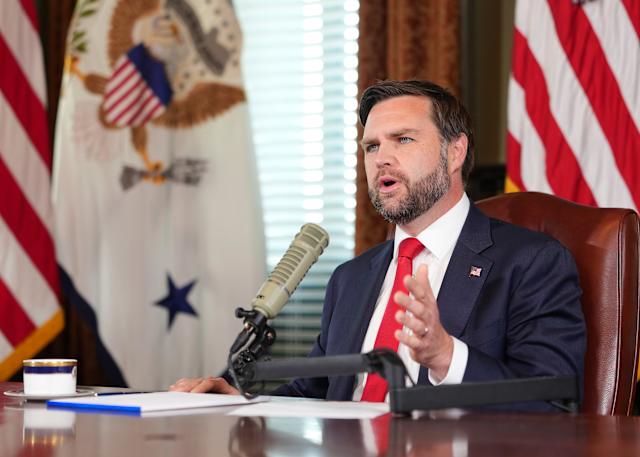
In the days since Kirk was shot while speaking at Utah Valley University, Vice President JD Vance has stepped into the spotlight, guest-hosting Kirk’s own podcast to demand a crackdown on “leftist nongovernmental organisations.” Senior White House officials joined in, promising to “identify, disrupt, dismantle and destroy” networks they accuse of spreading hate and violence. Yet there has been no evidence that any of the named groups were connected to Kirk’s death. The suspect arrested is a lone 22-year-old whose political ideology remains murky.
This is what has Americans gripped with fear: the realisation that grief is being weaponised, that tragedy is being used as political currency. It is one thing to condemn violent rhetoric or criminal acts. It is quite another to seize on an assassination to paint entire swathes of civil society as enemies of the state.
Fear of vague enemies
The language matters. When leaders speak of “leftist groups” in the abstract, they leave the category deliberately undefined. Does it include media outlets critical of the administration? Foundations that fund progressive causes? Book clubs? Student organisations? Once you turn a tragedy into a licence to target opponents, the boundaries become elastic. And it is precisely that elasticity that alarms Americans across the political spectrum.
The memory of McCarthyism looms large: accusations without evidence, careers destroyed by insinuation, dissent chilled by fear. Today, the spectre returns under a new banner. Citizens are left wondering whether their activism, their union membership, or even their church social justice committee could one day be cast as subversive.

Historical echoes
History teaches that governments often use crisis as a gateway to expand power. After the attacks of September 11, the Patriot Act vastly broadened surveillance authorities. During the Red Scare, accusations of communist sympathy justified loyalty oaths and blacklists. Even abroad, authoritarian regimes have routinely exploited national tragedies — an assassination, a terrorist attack, a riot — to justify repression.
The concern now is not abstract. When the vice president of the United States uses a taxpayer-funded office to co-host a podcast calling for action against vaguely defined enemies, the constitutional alarm bells ring. Freedom of speech, freedom of association, and due process are not partisan luxuries. They are the bedrock of American democracy.
What’s being ignored
The fear also stems from what is being overlooked. The man arrested for Kirk’s killing was an individual, not a network. Yet officials immediately leapt to cast blame on entire “leftist ecosystems.” It is a non sequitur that serves political ends more than public safety.
Imagine if a crime committed by an individual right-wing extremist were used to justify dismantling the NRA, evangelical charities, or conservative think tanks. The outrage would be instant and justified. The same principle applies here: collective punishment has no place in a democracy built on individual responsibility.
The partisan double standard
There is another reason Americans are uneasy. Many of the same voices now promising to use state power against liberal NGOs were only recently railing against the supposed “weaponisation of government” when investigations turned toward right-wing groups. They pardoned or excused January 6 rioters as patriotic protestors. They decried “cancel culture” when corporations dropped sponsorships or social platforms flagged misinformation. Yet now they appear willing to wield the full machinery of the state against their own opponents.
The hypocrisy is stark. If “weaponisation of government” was dangerous then, it is just as dangerous now.
The slippery precedent
Even conservatives who admired Kirk are pausing at this moment. Because they know that today’s crackdown on the left could be tomorrow’s crackdown on the right if political power changes hands. Precedent does not vanish with the next election. Tools of repression, once normalised, are rarely put back on the shelf.
That is why so many Americans feel fear rather than comfort in these pronouncements. The nation is not being promised protection, but control.
What should happen instead
Charlie Kirk’s death is tragic. It deserves solemnity, justice for the perpetrator, and a rejection of political violence from all sides. Leaders should be using their platforms to calm tensions, to model restraint, to encourage respect for constitutional boundaries even in grief.
Instead, the choice to weaponise tragedy sends the opposite signal. It inflames division, casts suspicion on millions of ordinary citizens, and undermines trust in the impartiality of government.

If Kirk’s death is allowed to become a pretext for authoritarian drift, then the tragedy will extend far beyond the man himself. It will become another nail in the coffin of American democracy.
The stakes
In times of crisis, the measure of a government is not how forcefully it can lash out, but how faithfully it can uphold the principles it claims to defend. Free speech, free association, and political pluralism are fragile precisely because they are most tested in moments of anger and grief.
The assassination of Charlie Kirk should not be remembered as the day America’s leaders chose to narrow freedom even further. It should be remembered as the day citizens across the spectrum demanded that tragedy not be weaponised, that grief not be turned into oppression, and that the Constitution mean what it says, even when it is inconvenient.