

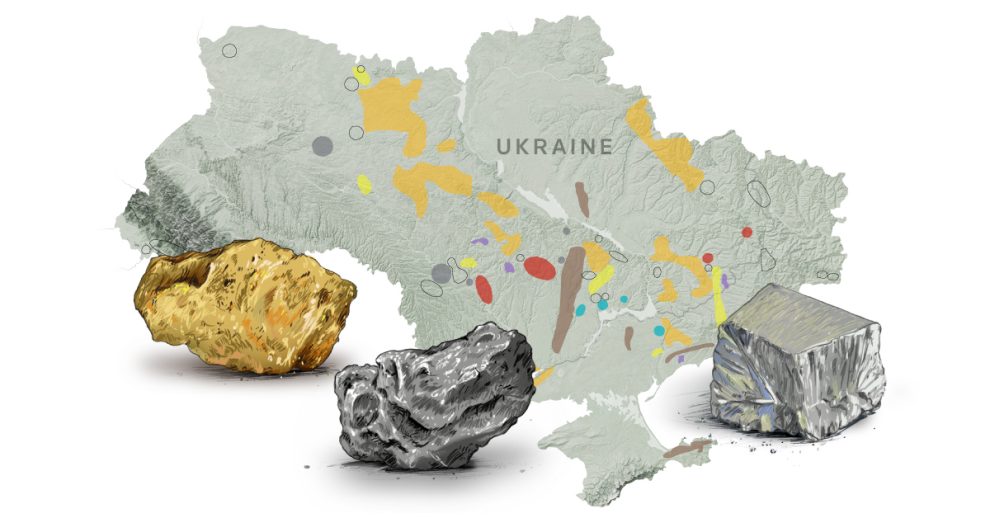

As the war in Ukraine grinds on, Russia may be facing a considerable toll in terms of men and material, yet the Kremlin appears to be calculating the long-term payoff of this conflict. For all the pain and destruction the invasion has wrought, there’s one factor that makes this war seem less like a loss and more like an investment: lithium. Ukraine, a nation caught in the crossfire of global power plays, holds vast reserves of this precious metal. And in the midst of an energy transition to renewables, lithium has become the new gold.
The high cost of conquest
It’s no secret that Russia’s military campaign in Ukraine has been costly. Thousands of soldiers have perished, and its economy is under heavy sanctions from the West. The war has drained Russia’s coffers and strained its resources. And yet, in the shadow of the battlefield, there lies a potential fortune—one that could easily offset the significant costs Russia is enduring today.
Ukraine is home to one of the richest untapped lithium deposits in Europe, with the Shevchenko deposit in Donetsk Oblast estimated at a staggering $11 trillion. This lithium is not just any resource; it’s the key to the future of energy. With the global shift towards renewable energy, demand for lithium is only set to increase, and controlling these reserves could give Russia a significant edge in the energy market. In this way, Ukraine’s mineral wealth becomes more than just a resource; it’s an economic lifeline, an opportunity to regain not just the costs of war but a long-term source of wealth and influence.
The war as an investment
From a purely economic perspective, Russia’s actions seem far more calculated. The Kremlin may consider this invasion a costly affair, but in the grander scheme, it may well view the conquest of Ukraine as an investment that will pay back multiple times over. If Russia successfully takes control of Ukraine’s lithium-rich territories, it could gain a monopoly over one of Europe’s most valuable resources. The potential revenue from mining this ore would be far greater than the costs incurred in the war effort, turning the conquest of Ukraine into a profitable venture rather than an expensive loss.
The strategic importance of lithium cannot be overstated. It’s the core component of electric vehicle batteries and energy storage solutions that are critical to the global green energy transition. With countries across the world racing to secure reliable sources of lithium, Russia’s control over these reserves would make it a key player in the energy markets for years to come. In essence, this war is not just about territory—it’s about energy security, economic power, and global influence.

Mining the ore: A clear agenda
And Russia is not just sitting idle, hoping that Ukraine’s lithium reserves will fall into its lap. The Kremlin has already begun plans to mine the Shevchenko lithium deposit, signaling a clear intention to exploit the region’s mineral wealth. By January 2024, Russian authorities had granted permission to begin mining the region, making it clear that their ambitions go far beyond territorial conquest. The seizure of Ukraine’s lithium reserves could provide Russia with a significant boost to its economy, potentially funding future military operations and securing its place as a dominant force in the global energy market.
This mining plan highlights just how crucial these reserves are to Russia’s war effort. The Kremlin is not simply engaged in a military conflict; it is positioning itself to control a critical resource that will drive the global economy for decades to come. In doing so, Russia is betting that its economic gains from controlling Ukraine’s mineral wealth will more than compensate for the human and material costs of the war.
The strategic shift: Ukraine’s mineral deal with the U.S.
But as Russia attempts to seize Ukraine’s resources, a new strategic development may have tipped the balance in Ukraine’s favour. In April 2025, Ukraine and the United States signed a groundbreaking deal to develop their critical mineral sector, including lithium. This agreement, part of a broader initiative to foster reconstruction and energy security, is not just about rebuilding Ukraine—it’s about securing access to resources that are central to the green energy revolution.
Enter former President Donald Trump’s economic understanding of the world: dollar signs. Trump, who is no stranger to leveraging economic power, clearly understands the weight of these mineral resources. The deal with the U.S. has heightened the importance of Ukraine’s lithium, placing it at the center of the global battle for energy dominance. And with the U.S. backing Ukraine’s access to these critical minerals, the geopolitical contest is no longer just about military power—it’s about economic leverage, too.
While the U.S. sees this deal as a crucial step towards energy independence, Ukrainian authorities have also raised concerns about the environmental and human costs of lithium extraction. The local communities in Ukraine, particularly in the Donetsk region, are wary of the potential destruction mining could bring to their already war-torn land. Furthermore, environmental activists argue that prioritizing mining could threaten vital ecosystems and undermine Ukraine’s efforts to rebuild a sustainable and green economy.
This shift signifies more than just a regional conflict; it has become a battle between East and West over who will control the key to the future of batteries—the backbone of the green energy transition. Russia, with its eyes set on Ukraine’s lithium, wants to control these resources for itself. Meanwhile, the West, particularly the U.S., sees Ukraine’s lithium as crucial to achieving energy independence and securing a future free from fossil fuels.
The long-term gamble
Russia’s pursuit of Ukraine’s lithium reserves represents a long-term gamble. While the immediate costs of the war are high, the potential for profit is immense. By seizing control of these mineral-rich territories, Russia could ensure not just its own economic recovery but also its dominance in the global energy market. The resources beneath Ukraine’s soil are not just an opportunity—they’re a powerful lever in the geopolitics of the 21st century.
But as the world watches the war unfold, it’s important to remember that this conflict is about much more than territorial expansion. Russia’s invasion of Ukraine is a calculated risk, one that could pay off in the form of trillions of dollars in mineral wealth. The stakes are higher than ever, and the future of energy—and global power—may hinge on the outcome of this brutal and costly war.
The invasion of Ukraine may have initially appeared to be about territorial conquest and a desire to weaken NATO. However, as the world pivots to green energy and lithium becomes increasingly important, the motives behind Russia’s actions are more complex. As long as vast mineral wealth sits unexploited in Ukraine’s ground, Russia will continue to see it as a strategic prize. The question remains whether the world will let this conflict be defined solely by tanks and artillery, or whether we will also acknowledge that the true battle might be over the trillions of dollars buried beneath the earth.