

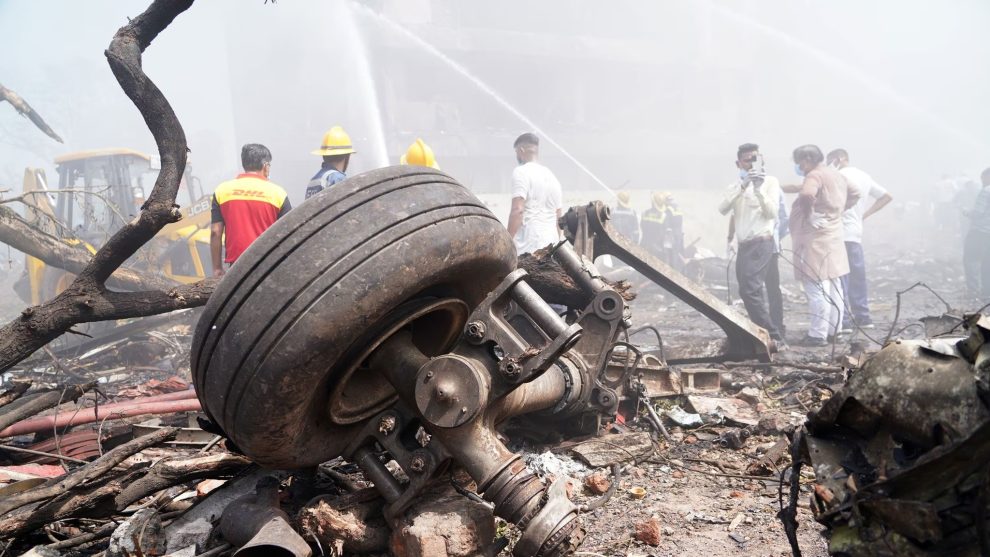

Having read the preliminary report into the crash of Air India Flight AI171 in Ahmedabad, I’m left with a chilling but plausible conclusion: a single moment in the cockpit — whether human or mechanical — may have led to disaster.
The Boeing 787-8 took off normally, climbing out from Runway 23 with no reported technical issues. But just seconds after liftoff, both engines lost power. Why? Because, as the report confirms, both fuel control switches moved from RUN to CUTOFF in quick succession — just one second apart.
That action cuts the flow of fuel to the engines. It is something that should never happen in flight unless deliberately commanded — and it happened here just as the aircraft reached 180 knots.
The voice recorder captured one pilot asking the other: “Why did you cutoff?” — to which the other replied: “I did not do so.” That line alone points to an unintentional event — not sabotage or procedural shutdown.
So what caused it?

The fuel switches are known to have locking mechanisms to prevent accidental movement. But in 2018, the FAA issued a Special Airworthiness Information Bulletin (SAIB) warning that on some Boeing aircraft — including the 787 — the locks were being installed in a disengaged state. The switches could potentially be moved by vibration, turbulence, or even brushing past them, especially if the lock wasn’t engaged.
Air India did not act on that bulletin, as it wasn’t mandatory.
This leaves us with two main possibilities:
The co-pilot — who was flying — may have accidentally moved the switches, perhaps while reaching across the panel, unaware that the locks were disengaged.
Or the switches moved due to vibration or mechanical factors, without direct human input — still a catastrophic consequence of a missing safety feature.
Either way, the result was the same: both engines lost thrust at a critical moment, and the aircraft crashed into a residential area, killing 260 people.
No blame is assigned at this stage, and the report does not conclude pilot error. But the facts as they stand point strongly toward a preventable accident, where a non-mandatory safety check might have made all the difference.
In aviation, it is often not one massive failure but a chain of small, overlooked details that end in tragedy. If confirmed, this may be one such case — and a stark lesson in why advisory safety notices must be taken seriously.