
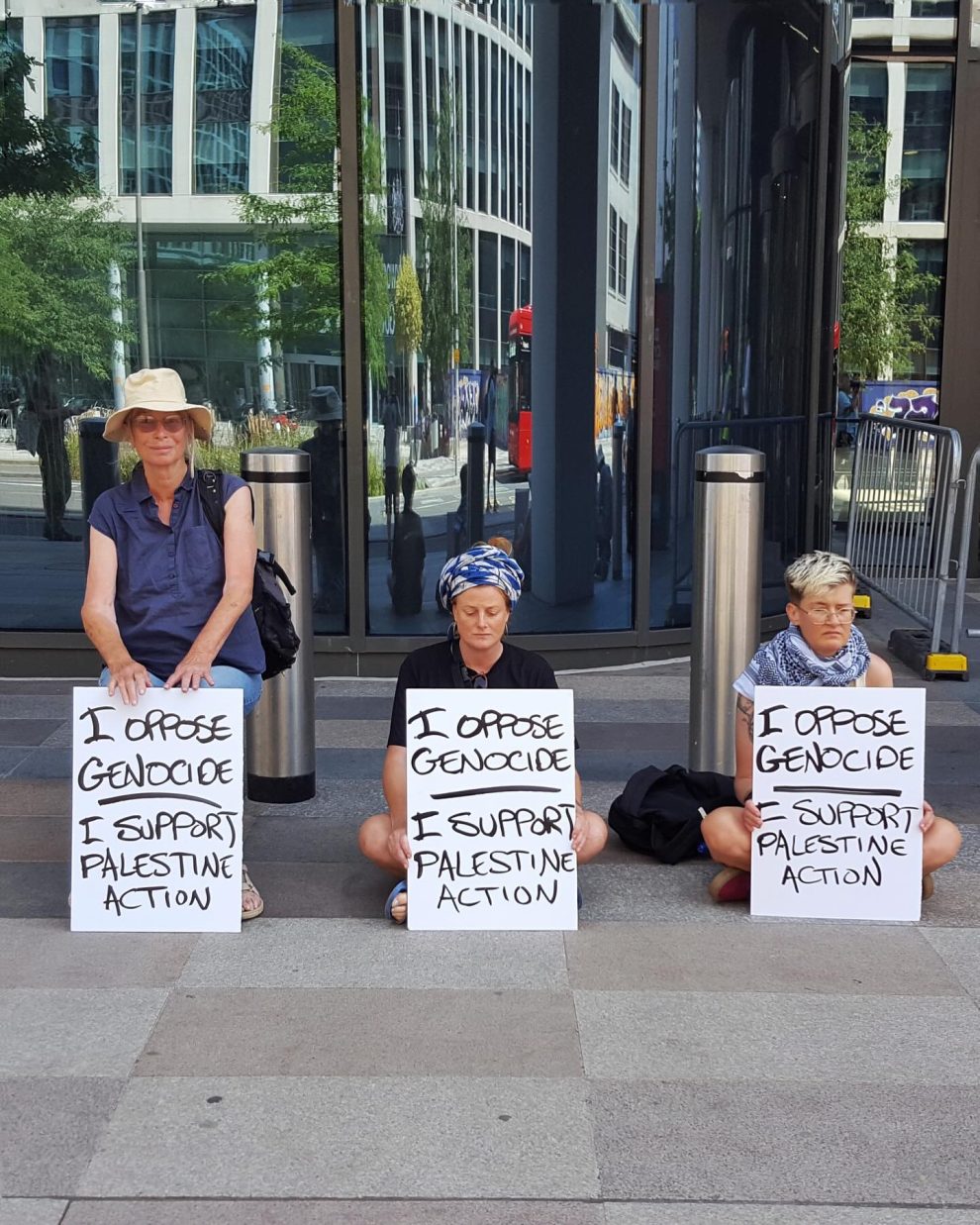

ON SATURDAY (July 12), eighty-six people were arrested across the UK for peacefully holding signs that read: “I oppose genocide. I support Palestine Action.” Their supposed crime? Expressing solidarity with a newly proscribed organisation. One week earlier, twenty-nine others were arrested for the same act. They were released without charge. Now nearly 200 people have been detained under terrorism powers, not for violence, but for holding cardboard and speaking their conscience.
This is not what national security looks like. This is what political censorship looks like.
Palestine Action was officially proscribed as a terrorist organisation by the UK Government on July 6. Its members have long engaged in bold, direct action against weapons factories that arm the Israeli military. Their tactics are disruptive, yes — but their aim is to expose British complicity in mass violence abroad. That used to be called protest. Now, under the Terrorism Act, it can mean prison.
Why did Parliament let this happen?
The truth is: most MPs didn’t seriously question the decision. When the Home Secretary moved to ban Palestine Action, few representatives objected. Many likely accepted the government’s vague assertions that it was necessary for public safety. Others feared the political cost of appearing sympathetic to an organisation branded “terrorist.” Some simply didn’t understand what they were voting for.

This is how democracies erode — not all at once, but through complacency, fear, and lack of scrutiny.
Now peaceful sign-holders — including vicars, civil servants, engineers, and elderly human rights campaigners — are being dragged into police vans. A man in Scotland was arrested for wearing a t-shirt. Others are being threatened for quoting scripture or criticising arms dealers.
This should terrify every citizen, no matter your politics. Because if this can happen to Palestine Action, it can happen to anyone. The threshold for criminalising protest is being lowered. The definition of terrorism is being stretched. And Parliament is sleepwalking into authoritarianism.
MPs were not elected to rubber-stamp executive overreach. They are supposed to challenge it. To ask the hard questions. To defend the principles of free expression and peaceful dissent.
They failed.
And so the burden falls to us. To the voters, the constituents, the public. We must ask our MPs: Did you vote for this? Did you read the details? Do you understand the consequences? And if not, why not?
There is still time to correct course. But it begins with scrutiny — and the courage to say: opposing genocide is not terrorism. Holding a sign is not a crime. And democracy demands more than blind obedience.