
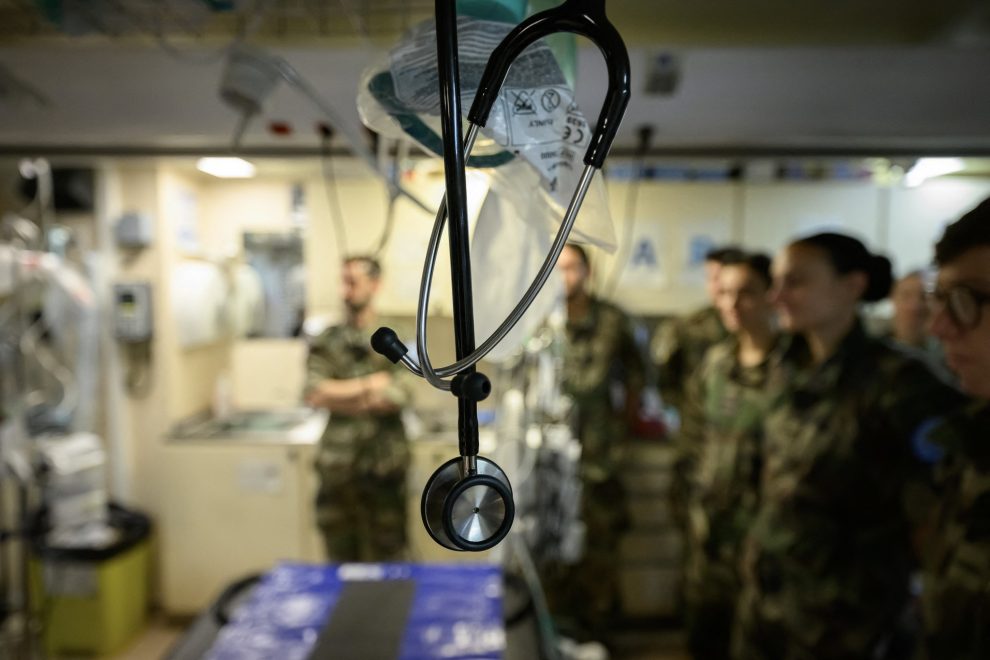

FRANCE has just ordered its hospitals to plan for war within the next year. Officials in Paris want health services ready to treat thousands of wounded soldiers a day if Europe erupts into conflict.
It is not a declaration that war is imminent, but it is a stark signal: the French government believes the risk is serious enough to prepare its medical system now.
So where does that leave Britain?
As a NATO member, Britain would not sit out a European conflict. If French wards are bracing for mass casualties, the NHS could face similar demands. Yet this is a health service already on its knees. COVID-19 exposed how quickly capacity can collapse. Record waiting lists tell their own story. If a war were to strain hospitals even further, the consequences would be brutal.
There are obvious objections. Announcing a “war plan” for the NHS could spread panic. Britain is an island, with the Channel offering some natural protection. The military has its own medical corps and field hospitals designed to absorb the first wave of wounded. And with ambulances queuing outside A&E today, many would argue we should fix the day-to-day crisis before diverting attention to hypothetical scenarios.
But pretending the threat does not exist is dangerous. Preparation need not mean panic. Stockpiling vital medicines, creating emergency surge capacity, and linking NHS hospitals more closely with Defence Medical Services would all strengthen resilience — not just against war, but against terror attacks, cyber strikes or another pandemic.
France’s move is a reminder that Europe is no longer living in an era of peace we can take for granted. Britain should learn the lesson. Quiet, sensible planning today could prevent chaos tomorrow. The choice is not between panic and denial, but between foresight and complacency.